
Security firm IOActive has published an advisory detailing some vulnerabilities in electronic locks from CyberLock. The lock maker is not happy about it and even attempted to prevent the disclosure of the security bugs with a DMCA notice.
The CyberLock key-centric access control system consist of electronic lock cylinders and programmable smart keys, or CyberKeys. The product can be used to secure doors, gates, trucks, shipping containers, and other assets.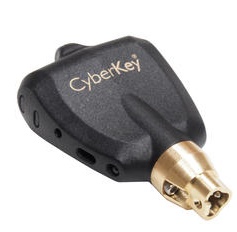
IOActive researcher Mike Davis has identified several security issues in CyberLock’s product. After some reverse engineering, the expert discovered that keys can be cloned using a site key obtained by intercepting communications between the key and the lock. These site keys, which can be recovered from the cylinder, are stored in clear text.
Davis also noted in his advisory that an attacker who possesses a cloned key can easily modify profile-based restrictions, such as one-time access and time of day restrictions, because they are based entirely on the logic of the key itself. It’s worth noting that the vendor’s website states that keys cannot be duplicated.
According to the researcher, the encryption algorithm is weak and it does protect credentials properly, and the logging system can be easily tricked because the validity of key IDs is not checked, allowing a malicious actor to enter bogus data into the log.
As for physical security, Davis noted that CyberLock cylinders can be relatively easily removed from the padlock enclosure.
The researcher says he attempted to report his findings to the vendor, but without success. However, just as he was preparing to publish the advisory, Davis received a notice from a Jones Day lawyer representing the electronic lock maker.
IOActive was asked to refrain from making the vulnerabilities public until CyberLock had the opportunity to analyze the issues and address them.
“Of course, as you know, the public reporting of security vulnerabilities can have significant consequences. CyberLock also takes the protection and enforcement of its intellectual property rights seriously and, prior to any public reporting, wants to ensure that there have been no violation of those rights, including CyberLock’s license agreements or other intellectual property laws such as the anticircumvention provision of the Digital Millenium Copyright Act,” the letter read.
After IOActive published its advisory, CyberLock’s legal representatives sent a second letter providing clarifications and disputing some of the issues mentioned in the report. They claim the advisory contains some “material inaccuracies and omissions” and that it “mischaracterizes the severity of the purported vulnerabilities.”
CyberLock’s representatives claim the findings are not applicable to all the products and software provided by the company. They stated that the vendor continually updates firmware to address security flaws, including the ones mentioned in IOActive’s advisory.
“Moreover, IOActive’s reverse engineering process required the use of skilled technicians, sophisticated lab equipment, and other costly resources not generally available to the public to extract CyberLock’s firmware from an embedded semiconductor chip,” the letter reads. “CyberLock does not claim, and never has, that a door protected by one of its product is impregnable.”
The company says it’s unhappy that its technical staff was given little notice to analyze the vulnerabilities, and noted that it’s surprised by IOActive’s “aggressive stance and tight deadlines on the publication of its report.”
Others also believe that the researcher shouldn’t have made his findings public before CyberLock got a chance to review them, and some even accused him of trying to get coverage in the press with this story. The researcher says this wasn’t a marketing ploy and that he “just wanted to hack stuff.” He blamed CyberLock for not handling the issue properly on its end.





