
Connect with us

Hi, what are you looking for?

SecurityWeekSecurityWeek

Management & Strategy

Travel Search Website Skyscanner Launches Bug Bounty Program

Travel search website Skyscanner announced on Wednesday the launch of a public bug bounty program with rewards of up to $2,000 per vulnerability.

Skyscanner has been running a private bug bounty program, which it claims helped address over 200 vulnerabilities in its systems. The company has now decided to open its program to the public.

Travel search website Skyscanner announced on Wednesday the launch of a public bug bounty program with rewards of up to $2,000 per vulnerability.

Skyscanner has been running a private bug bounty program, which it claims helped address over 200 vulnerabilities in its systems. The company has now decided to open its program to the public.

The bug bounty program, run with the help of crowdsourced security platform Bugcrowd, covers the skyscanner.net website and regional domains, the gateway.skyscanner.net API, the iOS and Android apps, and the partnerportal.skyscanner.net website. Other subdomains are out of scope.

The company is particularly interested in vulnerabilities affecting the profile, booking and partner portal sections of its service, but instructed researchers to use test accounts and warned them not to modify or access any user data.

The highest rewards, between $1,500 and $2,000 per vulnerability, have been offered for serious server security misconfigurations, server-side injection flaws, broken authentication issues, sensitive data exposure, and cryptography-related problems.
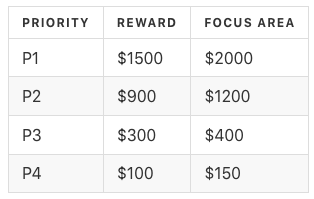
Skyscanner bug bounty rewards

“It is important to note that in some cases a vulnerability priority will be modified due to its likelihood or impact. In any instance where an issue is downgraded, a full, detailed explanation will be provided to the researcher – along with the opportunity to appeal, and make a case for a higher priority,” Skyscanner noted.

Advertisement. Scroll to continue reading.

All hacking activities must include a special header, they must be conducted using test accounts, and testing must be limited to in-scope assets. Researchers risk a 10% penalty if their submission is valid, but the rules haven’t been followed, Skyscanner said.

Related: Grammarly Launches Public Bug Bounty Program

Related: GitLab Launches Public Bug Bounty Program

Related: Singapore Government Announces Second Bug Bounty Program

Written By

Eduard Kovacs (@EduardKovacs) is senior managing editor at SecurityWeek. He worked as a high school IT teacher before starting a career in journalism in 2011. Eduard holds a bachelor’s degree in industrial informatics and a master’s degree in computer techniques applied in electrical engineering.

Daily Briefing Newsletter

Subscribe to the SecurityWeek Email Briefing for the latest cybersecurity threats, trends, and expert insights.

Click to comment

Trending

Daily Briefing Newsletter

Subscribe to the SecurityWeek Email Briefing to stay informed on the latest threats, trends, and technology, along with insightful columns from industry experts.

Join this live webinar as we explore if detection-first security operations can keep pace with AI, or if it’s time to rethink prevention as the strongest default.

Register

CodeSecCon bridges the gap between dev and security. Discover best practices for secure coding, innovative risk-reduction tools, and safe AI integration to cultivate a true DevSecOps culture. Safely secure your apps!

Register

People on the Move

Vensure Employer Solutions appointed Michael Lockhart as Chief Information Security Officer.

WISeKey has appointed Alexander Hirsch as Group Chief Marketing Officer.

UltraViolet Cyber has named Andrew Park Chief Information Security Officer.

More People On The Move

Expert Insights

Daily Briefing Newsletter

Subscribe to the SecurityWeek Email Briefing to stay informed on the latest cybersecurity news, threats, and expert insights. Unsubscribe at any time.





