
Pacemaker Patients Must Visit Healthcare Provider for Firmware Update That Addresses Security Vulnerabilities
A firmware update to address security vulnerabilities has been approved and is now available for radio frequency (RF)-enabled St. Jude Medical (now Abbott) implantable pacemakers, the U.S. Food and Drug Administration (FDA) announced this week.
Vulnerabilities in St. Jude Medical’s devices were made public last year by MedSec and Muddy Waters, as investment strategy to short sell shares of St. Jude’s stock. The report claimed that attackers could, among other things, crash implantable cardiac devices and drain their battery at a fast rate.
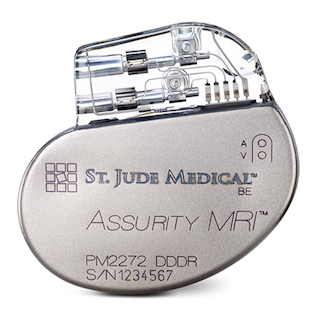 St. Jude rushed to refute the allegations and even sued the two companies, while University of Michigan researchers analyzed the MedSec/Muddy Waters report and discovered that their proof-of-concept (PoC) exploit did not actually crash the implanted cardiac device.
Muddy Waters and MedSec responded to the lawsuit in October, after contracting security consulting firm Bishop Fox to provide an expert opinion on St. Jude implantable cardiac devices. They also revealed additional attacks against those devices.
FDA and the Department of Homeland Security (DHS) also launched an investigation into the matter. In December 2016, FDA released guidance on the postmarket management of cybersecurity for medical devices, while St. Jude Medical pushed a security update to resolve some of the flaws in January 2017.
The newly released software update was approved on August 23 and is now available to “reduce the risk of patient harm due to potential exploitation of cybersecurity vulnerabilities for certain Abbott (formerly St. Jude Medical) pacemakers,” FDA announced.
The firmware is intended for St. Jude Medical’s implantable cardiac pacemakers and cardiac resynchronization therapy pacemaker (CRT-P) devices, including Accent, Anthem, Accent MRI, Accent ST, Assurity, and Allure devices. Implantable cardiac defibrillators (ICDs) or cardiac resynchronization ICDs (CRT-Ds) are not affected.
To install the update, patients must visit a healthcare provider, as the operation cannot be performed at home.
“The FDA recommends that patients and their health care providers discuss the risks and benefits of the cybersecurity vulnerabilities and the associated firmware update designed to address such vulnerabilities at their next regularly scheduled visit,” the FDA announced.
In an advisory, US CERT reveals that three different vulnerabilities are addressed with the new firmware update, all of which could be exploited via an adjacent network. However, an attacker looking to leverage the flaws needs to be in close proximity to the target pacemaker to allow RF communications, the advisory reads.
The first of the bugs, CVE-2017-12712, affects the pacemaker’s authentication algorithm, which can be compromised or bypassed to allow a nearby attacker to issue unauthorized commands to the pacemaker.
The second vulnerability, CVE-2017-12714, resides in the pacemakers not restricting or limiting the number of correctly formatted “RF wake-up” commands that can be received. Thus, a nearby attacker could drain the device’s battery by repeatedly sending commands.
Tracked as CVE-2017-12716, the third issue affects Accent and Anthem pacemakers, which transmit unencrypted patient information via RF communication, in addition to storing optional patient information without encryption. The Assurity and Allure pacemakers do not contain the vulnerability and also encrypt stored patient information.
The firmware releases meant to mitigate these issues include Accent/Anthem, Version F0B.0E.7E; Accent MRI/Accent ST, Version F10.08.6C; Assurity/Allure, Version F14.07.80; and Assurity MRI, Version F17.01.49.
“The pacemaker firmware update will implement “RF wake-up” protections and limit the commands that can be issued to pacemakers via RF communications. Additionally the updated pacemaker firmware will prevent unencrypted transmission of patient information (Accent and Anthem only),” the CERT advisory reads.
The firmware update can be applied to implanted pacemakers via the Merlin PCS Programmer and the operation should be performed by a healthcare provider.
Related: St. Jude Patches Vulnerabilities in Cardiac Devices
Related: Implantable Cardiac Defibrillators Easily Hacked: Researchers






