
Connect with us

Hi, what are you looking for?

SecurityWeekSecurityWeek

ICS/OT

Mitsubishi Develops Cybersecurity Technology for Cars

Japanese electronics and electrical equipment giant Mitsubishi Electric Corporation on Monday unveiled new technology designed to protect connected vehicles against cyber threats.

Japanese electronics and electrical equipment giant Mitsubishi Electric Corporation on Monday unveiled new technology designed to protect connected vehicles against cyber threats.

Many modern vehicles include communication features that allow connections to the Internet and mobile devices. While these features can be highly useful, they can also introduce cybersecurity risks.

Researchers have demonstrated on several occasions over the past years that connected cars can be hacked. Attacks, including ones that can be launched remotely, have been demonstrated against vehicles from Tesla, BMW, Nissan, and Fiat Chrysler Automobiles (FCA).

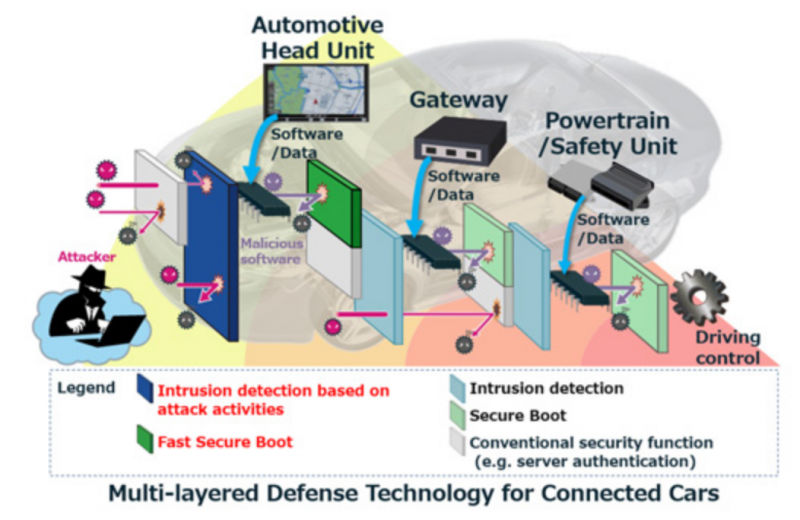
Mitsubishi has developed new technology that should protect connected cars against threats by using multiple layers of defense, including an intrusion detection system, secure booting, and authentication mechanisms.

The new defenses focus on protecting the automotive head unit, a component of the infotainment system and a car’s main link to the Internet, and systems responsible for controlling a vehicle.

According to Mitsubishi, the threat detection system focuses on typical attack-related activities in an effort to reduce load processing. The secure boot feature speeds up the booting process and ensures that the embedded software has not been tampered with by verifying its integrity.
Advertisement. Scroll to continue reading.

Mitsubishi cybersecurity technology for cars

The company says its new technology has been inspired by defenses originally developed for critical infrastructure systems, including ones used in the electric power, water, natural gas, and chemicals and petroleum sectors. However, that technology has been adapted for vehicles, where computing resources are more limited.

Related: Hackers Can Clone Tesla Key Fobs in Seconds

Related: New Vehicle Hack Exposes Users’ Private Data Via Bluetooth

Related: Researchers Demo Physical Attack via Car Wash Hack

Related: TCU Flaws Expose Cars to Remote Hacking

Written By

Eduard Kovacs (@EduardKovacs) is senior managing editor at SecurityWeek. He worked as a high school IT teacher before starting a career in journalism in 2011. Eduard holds a bachelor’s degree in industrial informatics and a master’s degree in computer techniques applied in electrical engineering.

Daily Briefing Newsletter

Subscribe to the SecurityWeek Email Briefing for the latest cybersecurity threats, trends, and expert insights.

Click to comment

Trending

Daily Briefing Newsletter

Subscribe to the SecurityWeek Email Briefing to stay informed on the latest threats, trends, and technology, along with insightful columns from industry experts.

Join this live webinar as we explore if detection-first security operations can keep pace with AI, or if it’s time to rethink prevention as the strongest default.

Register

CodeSecCon bridges the gap between dev and security. Discover best practices for secure coding, innovative risk-reduction tools, and safe AI integration to cultivate a true DevSecOps culture. Safely secure your apps!

Register

People on the Move

Erika Dean has been appointed Chief Information Security Officer at Tricentis.

C1 has named Jeff St. Clair Chief Revenue Officer.

John Opala has joined Ralph Lauren as Chief Information Security Officer.

More People On The Move

Expert Insights

Daily Briefing Newsletter

Subscribe to the SecurityWeek Email Briefing to stay informed on the latest cybersecurity news, threats, and expert insights. Unsubscribe at any time.





