Microsoft is launching new Microsoft Authenticator applications next month in popular mobile app stores to provide users with multi-factor authentication (MFA) functionality on the go.
MFA is the new trend among high-tech companies, and Microsoft is the latest to have made its plans on the technology official, after Yahoo! last year debuted a new sign-in process where passwords were no longer needed when logging into Yahoo! Mail.
Yahoo! expanded the feature to a broad range of other mobile apps earlier this year, and Google last month announced an update to its 2-Step Verification (2SV) functionality, no longer requiring users to enter a code received via SMS to login. All they have to do now is approve the login on their mobile devices to access the account from a computer.
Now, Microsoft says that its users will be able to take advantage of MFA directly on their mobile devices, courtesy of the Microsoft Authenticator apps that are set to arrive in mobile app stores on August 15. Offering support for both Microsoft accounts and Azure AD accounts, the upcoming software will bring features from the previous authenticator apps, but will also include new functionality.
The most important feature of the upcoming Microsoft Authenticator, however, is that it brings together the Microsoft account app and the Azure Authenticator, so that both end-users and enterprise customers can benefit from the same experience. The upcoming app promises a simple experience tailored for both consumer and business users, but also features the highest level of security, Microsoft says.
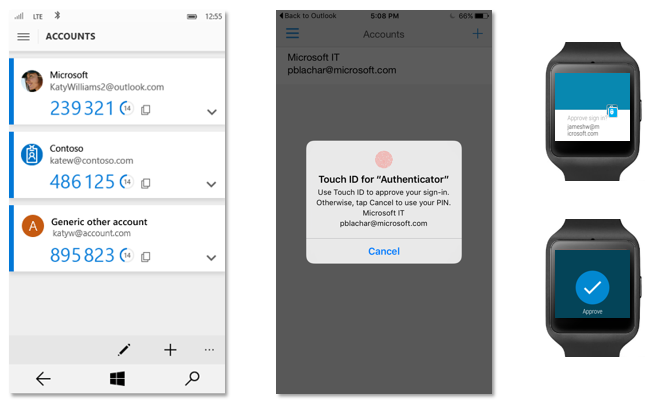
What’s more, Microsoft Authenticator will provide users with one-click push notifications, allowing them to login to their accounts by simply tapping the “Approve” button in the notification. In most cases, Microsoft explains, users will be able to do so from the notification itself, without having to open the app to complete the approval.
The mobile app will also include support for wearable devices, including Apple Watch or Samsung Gear devices (but not on Pebble smart watches). On top of that, support for fingerprint authentication will be available for both Android and iPhone users, Microsoft explains. However, Windows 10 Mobile users will not be as lucky, since iris scanner/fingerprint support won’t be available for them when the Authenticator arrives next month.
For enterprise customers, Microsoft sweetened the offering with the addition of certificate based authentication. What this means is that business users will be able to sign in through certificates instead of passwords.
Microsoft customers already using Azure Authenticator will receive the new application as an update and all existing accounts will be automatically upgraded. The users of Microsoft account app on Android will receive a message informing them on the availability of the new application and prompting them to download it, Microsoft says.