Russian cybersecurity firm Kaspersky has decided to shut down operations in the United States following the Commerce Department’s recent announcement that the company will soon no longer be allowed to sell its software in the country.
Kaspersky said on Monday that it will gradually wind down its US operations starting on July 20, 2024.
“The company has carefully examined and evaluated the impact of the US legal requirements and made this sad and difficult decision as business opportunities in the country are no longer viable,” Kaspersky stated.
The company is laying off employees in the United States, but said less than 50 people are impacted.
Many employees from Kaspersky’s offices around the world have left the company since Russia launched its war against Ukraine.
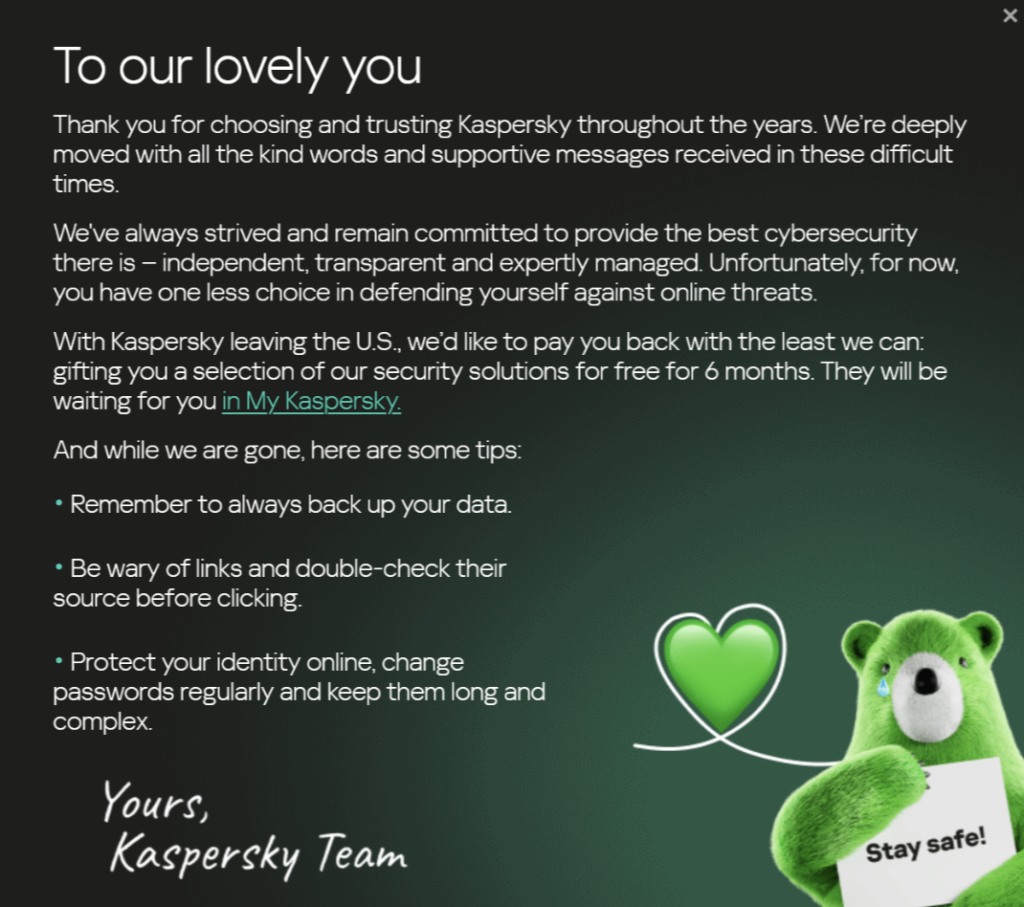
Kaspersky is informing some customers through its website that it’s leaving the United States, and is offering them a selection of its security products for free for a period of six months.
Kaspersky’s decision to exit the United States comes after the Commerce Department announced in June that the company would soon be prohibited from directly or indirectly providing its cybersecurity software products and services in the US.
Customers have been given until September 29 to migrate to other companies’ products. After that date, Kaspersky’s network will have to stop operating and software updates will no longer be provided.
Shortly after, the Treasury Department announced sanctions against 12 individuals with leadership roles at Kaspersky in Russia and the UK.
Immediately following the ban announcement, Kaspersky pointed out that it is still allowed to provide products and services related to threat intelligence, training and consulting in the US. It also noted that it had planned on pursuing all legally available options to preserve its current operations and relationships.
Kaspersky has been operating in the United States for nearly two decades, at times even providing its products and services to government agencies. However, in recent years, the company has faced mounting pressure from the US and European governments over fears of the Russian government’s potential control and influence.
In 2017, the Trump administration banned the use of Kaspersky products and services in federal agencies due to the risk of spying and several European countries followed suit.
Kaspersky responded by launching transparency initiatives and took other steps to clear its name, but Russia’s war against Ukraine has had a significant impact on its reputation in the West.
Related: Mysterious Operative Haunted Kaspersky Critics
Related: Germany Warns Against Russia’s Kaspersky Anti-Virus Software
Related: Italy Investigates Russia’s Kaspersky Antivirus Software