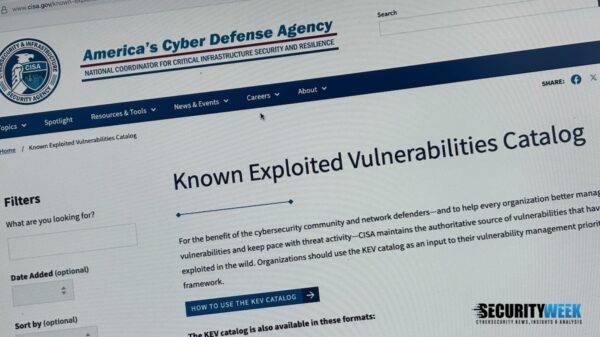
The US cybersecurity agency CISA on Tuesday added four bugs impacting multiple Qualcomm chipsets to its Known Exploited Vulnerabilities (KEV) Catalog.
All four issues were identified by Google’s Threat Analysis Group and Google Project Zero, which often report security defects exploited by commercial spyware vendors.
Three of the flaws, tracked as CVE-2023-33106, CVE-2023-33107, and CVE-2023-33063, were patched in October 2023 as zero-days, after Qualcomm learned from Google’s researchers that they were likely exploited in the wild.
All three vulnerabilities are described as memory corruption bugs. These types of flaws lead to crashes or unexpected behavior and may allow attackers to gain unauthorized access to systems and even execute arbitrary code.
The fourth vulnerability, CVE-2022-22071, was patched in May 2023, but Google revealed in October that it was likely being exploited as well. The issue is described as a use-after-free bug, which could allow attackers to execute arbitrary code.
Neither Google nor Qualcomm have shared details on the observed exploitation but, given Google’s track record of uncovering exploit chains attributed to spyware vendors, it is possible that all four vulnerabilities were targeted in surveillance campaigns.
Per Binding Operational Directive (BOD) 22-01, federal agencies have three weeks to identify vulnerable appliances and patch the bugs that CISA has added to KEV. For the Qualcomm issues, the deadline is December 26.
BOD 22-01 only applies to federal agencies, but CISA urges all organizations to take the necessary steps to address the security flaws included in its must-patch list.
In addition to the Qualcomm bugs, CISA this week added to the KEV catalog two WebKit vulnerabilities that Apple addressed last week. Tracked as CVE-2023-42916 and CVE-2023-42917, the bugs were likely exploited against older iPhones, but Apple patched them in newer iOS and iPadOS versions too, as well as in macOS and Safari.
Related: CISA Warns of Old JBoss RichFaces Vulnerability Being Exploited in Attacks
Related: Faster Patching Pace Validates CISA’s KEV Catalog Initiative
Related: Dozens of Exploited Vulnerabilities Missing From CISA ‘Must Patch’ List