
Threat actors have been targeting three critical-severity vulnerabilities in Ubiquiti devices, the US cybersecurity agency CISA warns.
The exploited flaws, tracked as CVE-2026-34908, CVE-2026-34909, and CVE-2026-34910, with a CVSS score of 10/10, were patched last month.
CVE-2026-34908 is described as an improper access control issue that could allow remote attackers to make unauthorized changes to vulnerable UniFi OS devices.
CVE-2026-34909 is a path traversal defect that could be exploited to access files on the underlying operating system and manipulate them to access underlying accounts.
CVE-2026-34910 is described as an improper input validation weakness that allows attackers to execute command injection attacks over the network. A variant of the flaw, tracked as CVE-2026-33000 (CVSS score of 9.1), requires authentication.
On May 21, Ubiquiti announced that UniFi OS Server version 5.0.8 was released with patches for these vulnerabilities.
The company made no mention of their in-the-wild exploitation, yet multiple users reported on the company’s forums and on Reddit that the bugs were exploited in the wild, likely as zero-days, to create rogue administrator accounts under the username ‘John Sim’, in what appear to have been automated reconnaissance attacks.
A BishopFox analysis of the patches shows that CVE-2026-34908 and CVE-2026-34909 are an authentication gateway bypass rooted in how NGINX processes crafted requests. In raw form, the requests begin with the auth-exempt prefix, while in normalized form they resolve to an authenticated internal route.
“We confirmed the bypass against a live [UniFi OS version] 5.0.6 virtual machine. Requests built this way reached internal backends that are supposed to require authentication,” BishopFox said.
The gateway bypass then leads to CVE-2026-34910, the lack of validation of package names in a function that handles updates. It allows an attacker to supply a crafted package name containing shell metacharacters, as well as an option that forces the command code path, leading to command injection.
“We validated the unauthenticated path against our live 5.0.6 test target using a benign, time-based oracle: a request whose injected portion simply causes the server to pause for a fixed interval before responding,” the company says.
As the Centre for Cybersecurity Belgium points out, UniFi OS devices are designed for managing infrastructure and are centrally integrated into networks. Their successful compromise could allow attackers to move laterally into enterprise environments.
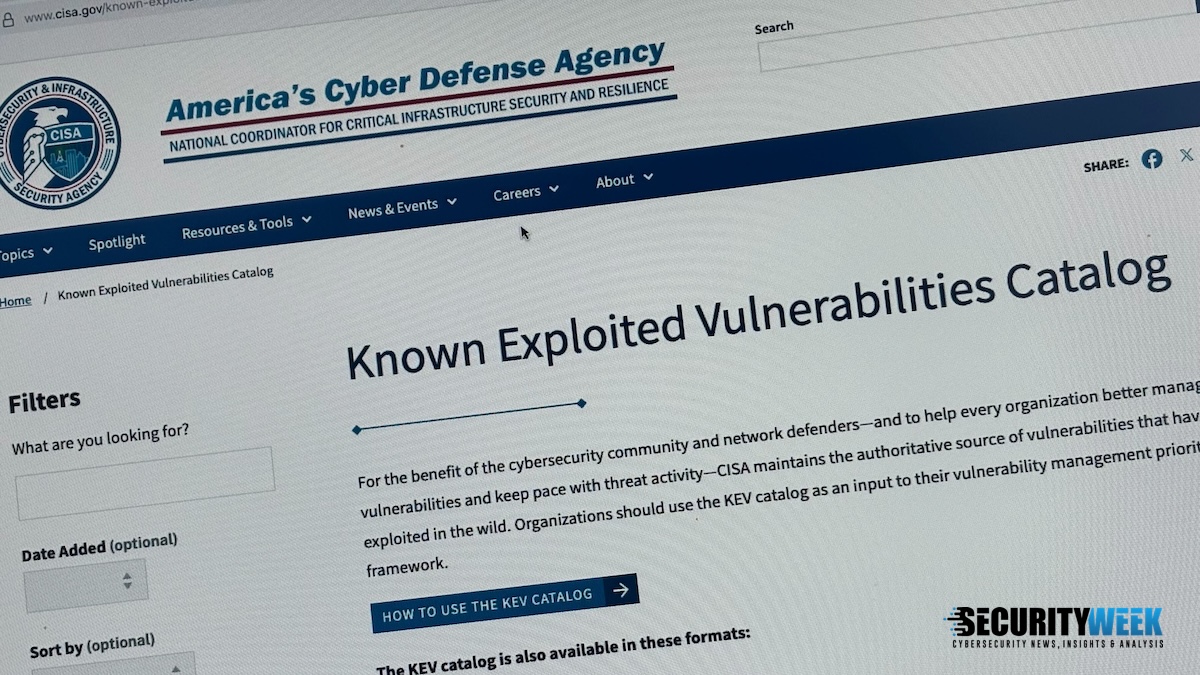
On Tuesday, CISA added CVE-2026-34908, CVE-2026-34909, and CVE-2026-34910 to its Known Exploited Vulnerabilities (KEV) catalog, urging federal agencies to patch them within three days, in line with BOD 26-04 requirements.
The same applies to CVE-2025-67038 (CVSS score of 9.8), an unauthenticated OS command injection defect in Lantronix EDS5000 that could lead to code execution with root privileges. The issue was disclosed in April along with 21 other Lantronix and Silex vulnerabilities, collectively tracked as BRIDGE:BREAK.
Related: Exploitable CI/CD Vulnerabilities Expose Millions of Repositories to Hijacking
Related: Hackers Exploiting Cisco Unified CM Vulnerability
Related: Eight-Year-Old Samsung KNOX Flaw Exposed Millions of Galaxy Devices to Kernel Attacks
Related: F5 Patches Critical, High-Severity NGINX Vulnerabilities






