
Malware & Threats
Attackers are creating new accounts and deleting existing ones and passwords to prevent legitimate access.
Hi, what are you looking for?



Expanded plugin count allows the malware to monitor users’ location, stream live audio, and interact with authenticated browser sessions.

Noteworthy stories that might have slipped under the radar: Tensorlake npm SDK compromised, Empire Market co-founder gets 40 years, exposed NVIDIA GPU monitors leak...
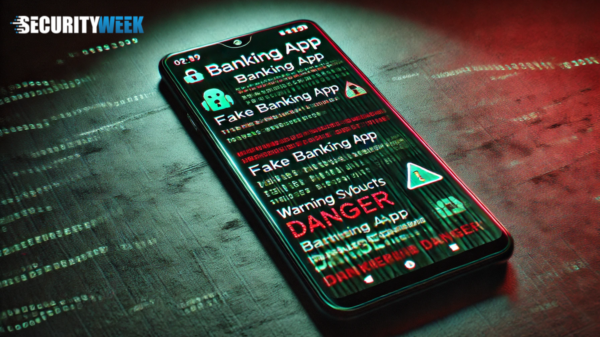
Midnight Mimosa is the name given to a malware campaign primarily running preinstalled on low-cost Android devices.

Flax Typhoon and other APTs used MicroScan and FishHub to scan and hack US and foreign critical infrastructure.
Attackers are creating new accounts and deleting existing ones and passwords to prevent legitimate access.
Since August 2023, attackers have published eight malicious packages as part of the MALFEX supply chain campaign.
ClingSTUN operates as a back-connect proxy backdoor, sets up persistence, and contains exploits for self-propagation.
Noteworthy stories that might have slipped under the radar: Kiteworks patches over 100 vulnerabilities, Microsoft publishes 2026 Digital Defense Report, AI finds 24 Android...
The dropper “carries a complete universal Mach-O inside itself, roughly 756 KB in the development build, and extracts it at runtime.
The China-based hacking group has been exploiting SharePoint vulnerabilities since July 2025.
The attacks targeted the US Department of Education and Library and Archives Canada, and researchers linked some agents to OpenAI.
The state-sponsored group has launched larger-scale phishing campaigns to deploy the CosmicPulse backdoor.
The personalized versions of ChatGPT were used to impersonate legitimate products and trick users into executing PowerShell commands.
The malware framework uses a modular architecture and a custom executable file format for long-term persistence.
The company says the measure was precautionary and that it has no evidence of Kiteworks or customer systems being compromised.
The Windows botnet relies on AI to maintain persistence, using xAI Grok to choose from predefined actions.
Noteworthy stories that might have slipped under the radar: BragJack attack against browser AI assistants, TDengine flaw threatens industrial telemetry uptime, Ubuntu update overhaul.
A threat actor is using three AI harnesses for vulnerability research, exploitation, and attack orchestration.
The attackers impersonate at least 40 companies and disable 145 security products to deploy infostealer malware.
The malware relies on AI for real-time device navigation and control, increasing adaptability and evasion.
Learn about Frontier Pace Governance: a practical approach to helping IT operations move at AI speed without sacrificing security, accountability, or operational discipline.
RegisterJoin as we decipher the world of zero trust and share war stories on securing an organization by eliminating implicit trust and continuously validating every stage of a digital interaction.
Register
 As AI accelerates vulnerability discovery and exploitation, so-called virtual patching still comes down to defense-in-depth and strong application security fundamentals.
(Joshua Goldfarb)
As AI accelerates vulnerability discovery and exploitation, so-called virtual patching still comes down to defense-in-depth and strong application security fundamentals.
(Joshua Goldfarb)
 - AI, supply-chain exposure, quantum computing and geopolitical conflict are testing security programs. Preparing for disruption must become part of day-to-day operations.
(Steve Durbin)
- AI, supply-chain exposure, quantum computing and geopolitical conflict are testing security programs. Preparing for disruption must become part of day-to-day operations.
(Steve Durbin)
 Agentic remediation is not an act of faith. We are talking about fixing known problems, not judgment calls about unfamiliar risk.
(Nadir Izrael)
Agentic remediation is not an act of faith. We are talking about fixing known problems, not judgment calls about unfamiliar risk.
(Nadir Izrael)
 Point-in-time audits and sampled assessments offer only snapshots; continuous control monitoring provides evidence that security controls are working today.
(Sravish Sridhar)
Point-in-time audits and sampled assessments offer only snapshots; continuous control monitoring provides evidence that security controls are working today.
(Sravish Sridhar)
 Every leaked credential should be dead, or dying, within sixty seconds of being found. Here's a proposal to make that the default.
(Matt Honea)
Every leaked credential should be dead, or dying, within sixty seconds of being found. Here's a proposal to make that the default.
(Matt Honea)