
Several critical and high severity vulnerabilities have been found in remote terminal unit (RTU) modules designed for the energy sector and used in various European countries.
Bernhards Blumbergs and Arturs Danilevics of Latvia’s CERT.LV discovered that Telem-GW6 and Telem-GWM products made by Estonia-based Martem are affected by vulnerabilities that can be exploited to cause a denial-of-service (DoS) condition and execute arbitrary code and commands.
Martem, which specializes in telecontrol systems for supervising and controlling electrical distribution networks, says its clients are electrical distribution firms, and industrial and transportation companies that have their own electrical networks. Martem’s main customers are located in Estonia, Lithuania, Latvia and Finland.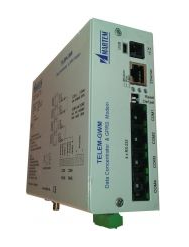
The company said its RTUs were used earlier this year in a cyber defense exercise organized by the NATO Cooperative Cyber Defence Centre of Excellence (CCDCOE).
The vulnerable products are data concentrators that collect data from peripheral devices in the substation. The RTUs impacted by the security holes found by Blumbergs and Danilevics are GW6 version 2018.04.18-linux_4-01-601cb47 and prior, and GWM version 2018.04.18-linux_4-01-601cb47 and prior.
The most serious of the flaws, with a CVSS score of 10, is CVE-2018-10603, which allows a rogue node on the network to send unauthorized commands and take control of the industrial process. The vulnerability is caused by the lack of authentication for commands using IEC-104, a protocol standard for telecontrol, teleprotection and telecommunications for electric power systems.
Another security hole, rated “high severity” and tracked as CVE-2018-10607, has been classified as an uncontrolled resource consumption issue. According to ICS-CERT, a DoS condition can be caused within the industrial process control channel by creating new connections to one or more input/output accessories (IOAs) and not closing them properly.
Learn More at SecurityWeek’s 2018 ICS Cyber Security Conference
The last vulnerability, tracked as CVE-2018-10609 and also classified as “high severity,” is a cross-site scripting (XSS) bug that can be exploited to execute arbitrary code on the client side with the privileges of the targeted user.
According to ICS-CERT, the vulnerabilities can be exploited remotely even by an attacker with a low skill level.
The vendor says the XSS flaw will be patched with the release of firmware version 2.0.73, which is expected to become available sometime after May 23. Attacks can also be prevented by disabling the web server if it’s not needed, or protecting the web server with a strong password to avoid unauthorized access.
The other two vulnerabilities can be mitigated through configuration changes, including using VPNs, using a firewall for packet filtering, and configuring the RTU so that only trusted systems can send commands.
Related: Flaw in Siemens RTU Allows Remote Code Execution
Related: Emerson Patches Severe Flaw in ControlWave Controllers






