
Seagate recently patched several vulnerabilities discovered by researchers in the company’s Personal Cloud and GoFlex products, but some weaknesses impacting the latter remain unfixed.
GoFlex Home vulnerabilities
In late September 2017, researcher Aditya K. Sood discovered vulnerabilities that can be exploited for cross-site scripting (XSS) and man-in-the-middle (MitM) attacks in Seagate’s GoFlex Home network-attached storage (NAS) product.
GoFlex users are provided a web service, accessible at seagateshare.com, that allows them to remotely manage the product and upload files to the cloud. The service can be accessed using the name of the device, a username, and a password. An HTTP server present in the GoFlex firmware requires port forwarding on the user’s router in order to connect to the web service.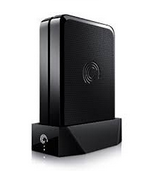
Sood discovered that the embedded server still supports SSLv2 and SSLv3, and the seagateshare.com service supports SSLv3. SSLv2 and SSLv3 are obsolete protocols that are known to be vulnerable to MitM attacks, including via the methods known as DROWN and POODLE.
The expert has identified more than 50,000 Seagate devices – hosted on unique IP addresses – that have SSLv2 and SSLv3 enabled.
Sood also noticed that the unique name (device_id) of each device is not difficult to find. During the tests he conducted, the expert managed to collect more than 17,000 unique device IDs.
Another security hole found by the researcher is an XSS affecting the seagateshare.com website. An attacker could have exploited this vulnerability to execute malicious code in the context of a user’s browsing session by getting the victim to click on a specially crafted link.
While Seagate has fixed the XSS vulnerability, the company told Sood it does not plan on addressing the issue related to the use of SSLv2 and SSLv3.
The researcher disclosed his findings on Monday. Additional technical details on the vulnerabilities are available on his blog.
Personal Cloud vulnerabilities
Securify researcher Yorick Koster also disclosed recently a couple of vulnerabilities he discovered in Seagate products. Specifically, he found that Personal Cloud NAS devices are affected by command injection and file deletion flaws.
The security holes affect the Seagate Media Server application, which allows users to easily access their photos, music and movies. The app can be accessed without authentication and unauthenticated users can upload files using a Public folder.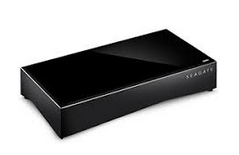
The command injection vulnerabilities, tracked as CVE-2018-5347, allow an unauthenticated attacker to run arbitrary commands with root privileges. The security holes can be exploited remotely via cross-site request forgery (CSRF) attacks even if a device is not directly connected to the Internet.
Koster also found that the Media Server app is affected by a vulnerability that allows an unauthenticated attacker to delete arbitrary files and folders from the NAS device. Since CSRF protections are missing, this flaw can also be exploited remotely by getting the targeted user to access a specially crafted website.
The vulnerabilities discovered by Koster were patched by Seagate on December 11 with the release of firmware version 4.3.18.0. Separate advisories detailing the command injection and file deletion flaws, including proof-of-concept (PoC) code, were published earlier this month.
Related: Multiple Zero-days Disclosed in Western Digital NAS Storage Devices
Related: StorageCrypt Ransomware Targets NAS Devices via SambaCry Exploit
Related: Netgear Patches Over 50 Flaws in Routers, Switches, NAS Devices






