
Connect with us

Hi, what are you looking for?

SecurityWeekSecurityWeek

Data Protection

New Pastebin Security Features Draw Criticism

Text storage service Pastebin last week announced the introduction of two new security features, but some industry professionals believe they will likely be abused by malicious actors.

Text storage service Pastebin last week announced the introduction of two new security features, but some industry professionals believe they will likely be abused by malicious actors.

The new features are Burn After Read, which causes pastes to be deleted after they are read, and Password Protected Pastes, which allows users to set a password for the data they post.
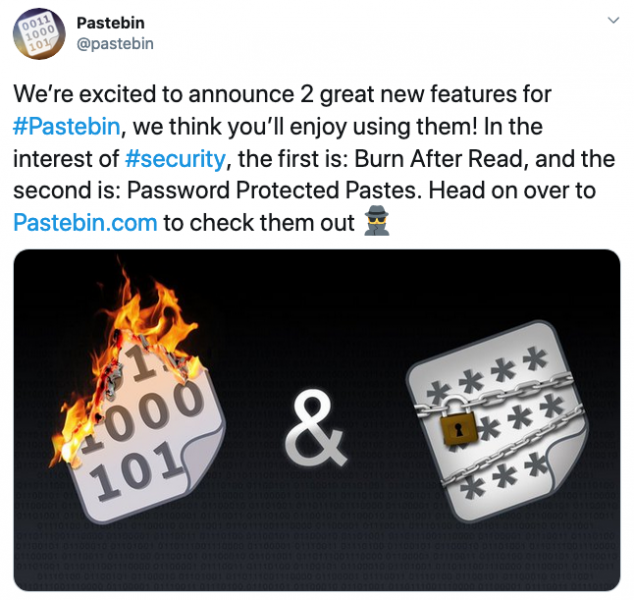
Pastebin announces new security features

In response to Pastebin’s announcement of the new features on Twitter, several cybersecurity experts said threat actors will likely abuse them for command and control (C&C) and other purposes, while making it more difficult for defenders to analyze their attacks.

Malware abusing Pastebin is not unheard of. One example is the WatchBog cryptocurrency miner, which fetched configuration data and payloads from Pastebin.

The new features introduced by Pastebin have been described as a “win for threat actors,” “protections for malicious data,” “an extra layer of protection for threat actors” and “a headache for the good guys.”

Several people claim they may configure their enterprise security solutions to either completely block Pastebin traffic or at least send out an alert when such traffic is detected.

Advertisement. Scroll to continue reading.

However, not everyone agrees that the new security features will be found useful by threat actors. Some users welcomed the features, while others have pointed out that Pastebin’s competitors have offered these features for some time and malicious actors could have abused those if they really would have found them useful.

SecurityWeek has reached out to Pastebin for comment, but the company has yet to respond.

Related: Mozilla Discontinues Firefox Feature Abused in Malware, Phishing Attacks

Related: Microsoft Says China-Linked Hackers Abused Azure in Attacks

Related: VLC Responds to Criticism Over Lack of HTTPS for Updates

Related: Zoom Rolls Out New Measures as Security Fears Mount

Written By

Eduard Kovacs (@EduardKovacs) is senior managing editor at SecurityWeek. He worked as a high school IT teacher before starting a career in journalism in 2011. Eduard holds a bachelor’s degree in industrial informatics and a master’s degree in computer techniques applied in electrical engineering.

Daily Briefing Newsletter

Subscribe to the SecurityWeek Email Briefing for the latest cybersecurity threats, trends, and expert insights.

Click to comment

Trending

Daily Briefing Newsletter

Subscribe to the SecurityWeek Email Briefing to stay informed on the latest threats, trends, and technology, along with insightful columns from industry experts.

Join this live webinar as we explore if detection-first security operations can keep pace with AI, or if it’s time to rethink prevention as the strongest default.

Register

CodeSecCon bridges the gap between dev and security. Discover best practices for secure coding, innovative risk-reduction tools, and safe AI integration to cultivate a true DevSecOps culture. Safely secure your apps!

Register

People on the Move

Erika Dean has been appointed Chief Information Security Officer at Tricentis.

C1 has named Jeff St. Clair Chief Revenue Officer.

John Opala has joined Ralph Lauren as Chief Information Security Officer.

More People On The Move

Expert Insights

Daily Briefing Newsletter

Subscribe to the SecurityWeek Email Briefing to stay informed on the latest cybersecurity news, threats, and expert insights. Unsubscribe at any time.





