

A team of academic researchers has disclosed the details of a new attack method that can be used to break CPU-based security technologies from Intel and AMD by targeting DDR5 memory.
The attack method, named TEE.fail, was discovered by researchers from Purdue University and Georgia Institute of Technology.
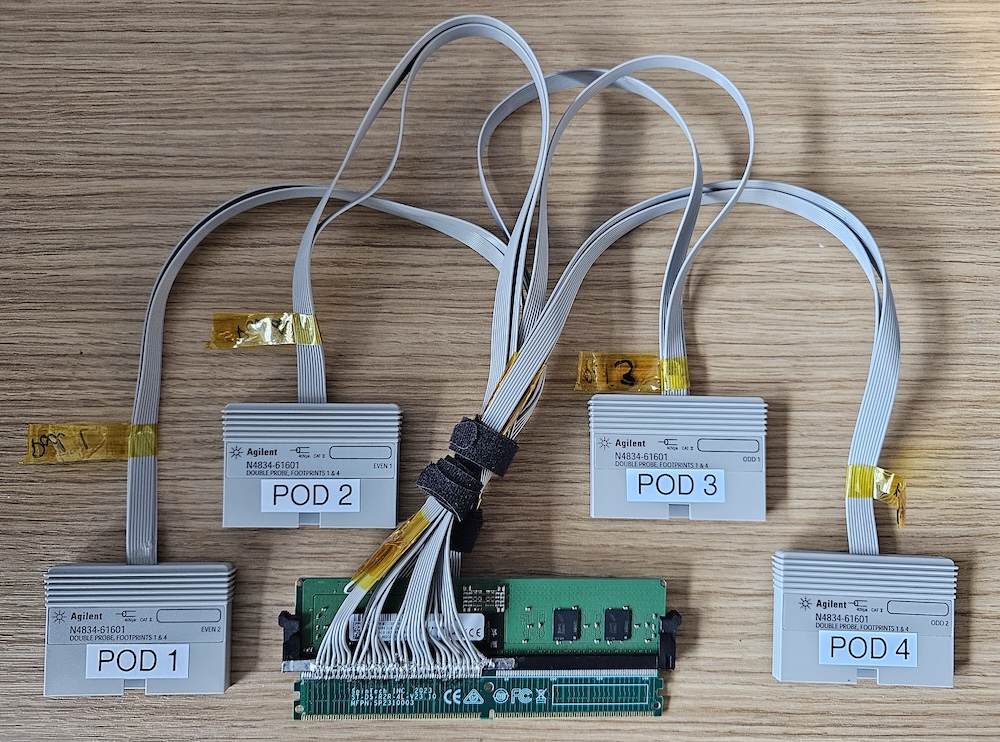
The attack requires physical access to the targeted system and involves placing a device named an interposer between the computer’s CPU and memory in an effort to analyze DRAM bus traffic.
An attacker can then use the captured data to extract cryptographic keys from Intel TDX and AMD SEV-SNP trusted execution environment (TEE) implementations. In addition, a hacker can extract attestation keys that can be leveraged to compromise Nvidia’s GPU Confidential Computing, which allows attackers to run AI workloads without any TEE protections, the researchers explained.
These confidential computing technologies, used for data centers and cloud computing, are designed to protect code and data from attackers who have compromised the host system, and even from malicious insiders.
The TEE.fail attack involves soldering the interposer to the DIMM. The interposer built by the researchers, for which they have made available schematics, costs under $1,000 if off-the-shelf electronic components are used.
TEE.fail is similar to the recently disclosed WireTap and Battering RAM attacks, which also involved using an interposer to capture valuable data from memory.
However, there are some significant differences. WireTap and Battering RAM only worked against DDR4 memory, while TEE.fail targets DDR5.
“The difference is critical, as TEE.fail can be used to attack the latest TEE offerings by Intel and AMD, namely Intel TDX and AMD SEV-SNP with Ciphertext Hiding, which offer confidential virtual machines (CVMs),” the researchers explained. “As CVMs are used for the trust anchor in Nvidia’s GPU confidential computing, we show how our attack also breaks GPU attestation.”
Both Intel and AMD have published advisories in response to the TEE.fail research. However, as in the case of WireTap and Battering RAM, the chip giants said attacks requiring physical access to the targeted system are not in scope of their products’ threat model.
Related: New CounterSEVeillance and TDXDown Attacks Target AMD and Intel TEEs
Related: RMPocalypse: New Attack Breaks AMD Confidential Computing
Related: VMScape: Academics Break Cloud Isolation With New Spectre Attack






