
Under the new rule, overseas data centers that serve companies in countries including China, Russia, Iran and Cuba are required to identify their end users.




Hi, what are you looking for?

Under the new rule, overseas data centers that serve companies in countries including China, Russia, Iran and Cuba are required to identify their end users.
The attacker stole an access key from Fireworks and used it to exfiltrate credentials that enabled them to push malicious Claude Code extension copies.
It will move to a 60-day vulnerability disclosure window in February 2027 and to a 30-day window in January 2028.
Chinese threat actors are broadly adopting the agentic AI penetration testing framework to accelerate their attacks.
Kaspersky suspects exploitation of Telegram’s new widgets to deliver WebRAT, as researchers demo RCE and Pavel Durov disputes the claims.
Tracked as CVE-2026-114713, the high-severity flaw allows attackers to execute commands with server/IRCOp privileges.
Vulncheck disclosed 14 vulnerabilities affecting Copeland XWEB EVO controllers, including two that threat actors quickly targeted.
Hackers compromised a third-party services provider and stole names, addresses, and driver’s license numbers.
Tor 0.4.9.17 patches several security issues, including one related to how built-in DoS protections deal with IPv6.
Phishing emails posing as Microsoft 365 service notices referenced the real outage incident and threatened to delete held messages.
The move follows President Trump’s order to replace “artificial intelligence” with “super intelligence” in executive branch communications.
The directive protects smartphones as part of a person’s private sphere and requires “free and informed consent” for such access, the authority said.
Overreliance on AI could erode the creativity, clear communication, and critical thinking security teams need when there’s no playbook.
The tech giant has detailed the architecture designed to isolate ambient sensor data from the main OS on HomeView and new iPhones.
Officials say there is no evidence of a cyberattack behind the nationwide FAA outage, which may have been caused by a software update.
Federal officials have yet to say what caused the communications disruption or whether they are investigating a possible cyberattack.

The leading global conference series for Operations, Control Systems and IT/OT Security professionals to connect on SCADA, DCS PLC and field controller cybersecurity.
Using thousands of hijacked accounts, the wfx-loot campaign planted a CI secret stealer that ran in over 1,800 GitHub repositories.




Created by Zerto and Kashya veterans, the startup has launched a platform designed to recover whole cloud applications.



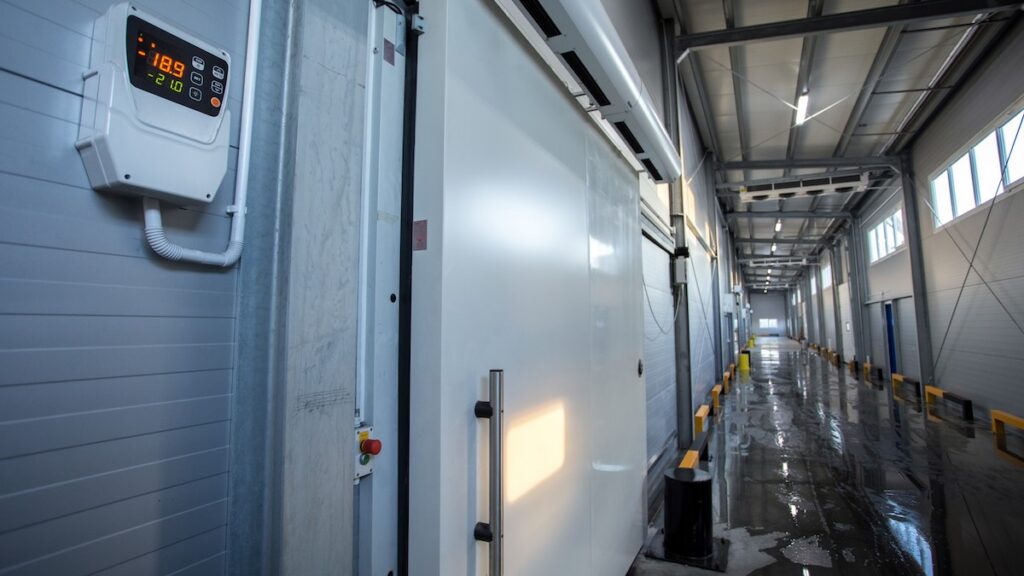

Vulncheck disclosed 14 vulnerabilities affecting Copeland XWEB EVO controllers, including two that threat actors quickly targeted.