
Connect with us

Hi, what are you looking for?

SecurityWeekSecurityWeek

Application Security

GitHub Introduces Automatic Vulnerability Scanning Feature

Microsoft-owned code hosting platform GitHub is now providing developers with the option to have their code repositories automatically scanned for vulnerabilities.

Available as a ‘default setup’ option, the new feature is meant to help code builders find and resolve vulnerabilities faster.

Microsoft-owned code hosting platform GitHub is now providing developers with the option to have their code repositories automatically scanned for vulnerabilities.

Available as a ‘default setup’ option, the new feature is meant to help code builders find and resolve vulnerabilities faster.

Available for JavaScript, Python, and Ruby repositories, it allows open source developers and enterprises to enable code scanning without the use of a .yaml file and will immediately provide them with insights into their code’s issues.

To enable the new option, GitHub users should head to the ‘Settings’ tab in their repositories and then navigate to ‘Code security and analysis’, under ‘Security’.
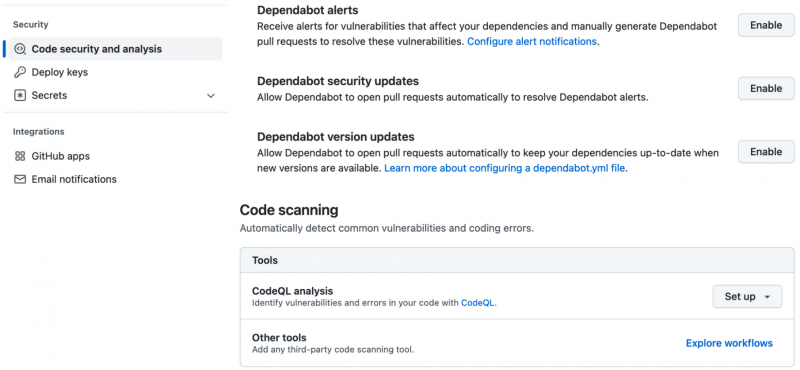
GitHub vulnerability scanning

Developers will find two options: ‘Default’, which automatically sets up code scanning, and Advanced, which allows them to customize code scanning using a .yaml file. If default setup is not supported, the first option will be grayed out.

“When you click on ‘Default’, you’ll automatically see a tailored configuration summary based on the contents of the repository. This includes the languages detected in the repository, the query packs that will be used, and the events that will trigger scans. In the future, these options will be customizable,” GitHub explains.

Advertisement. Scroll to continue reading.

To enable automatic code scanning for their repositories, developers need to click ‘Enable CodeQL’ after reviewing the displayed configuration.

“We are working hard to make this experience available for all languages supported by the CodeQL analysis engine. We will continue rolling out support for new languages based on popularity and build complexity over the next six months,” GitHub announced.

Related: GitHub Announces Free Secret Scanning, Mandatory 2FA

Related: GitHub Introduces Private Vulnerability Reporting for Public Repositories

Related: GitHub Improves npm Account Security as Incidents Rise

Written By

Ionut Arghire is an international correspondent for SecurityWeek.

Daily Briefing Newsletter

Subscribe to the SecurityWeek Email Briefing for the latest cybersecurity threats, trends, and expert insights.

Click to comment

Trending

Daily Briefing Newsletter

Subscribe to the SecurityWeek Email Briefing to stay informed on the latest threats, trends, and technology, along with insightful columns from industry experts.

Join as speakers examine the various components of ASM strategy, the push to mandate continuous asset visibility and inventory tools, and the use of red-teaming, bug bounties and pen-tests in modern security programs.

Register

In this live webinar, learn how to define your minimum viable business, identify the systems it depends on, measure actual recovery time against business requirements, and present the gaps to the board as measurable risk.

Register

People on the Move

Frank Verdecanna has been appointed Chief Financial Officer at Armadin.

Keeper Security has named Jessica Krowel and Bill Grabner as SVPs of sales for North America.

Skyhigh Security has named Anthony Palladino as Chief Operating Officer.

More People On The Move

Expert Insights

Daily Briefing Newsletter

Subscribe to the SecurityWeek Email Briefing to stay informed on the latest cybersecurity news, threats, and expert insights. Unsubscribe at any time.





