Connect with us

Hi, what are you looking for?

SecurityWeekSecurityWeek

Vulnerabilities

Default Password Exposes Digital Highway Signs to Hacker Attacks

Highway dynamic message signs (DMS) from LED display and scoreboard systems manufacturer Daktronics are vulnerable to cyberattacks, the Department of Homeland Security’s ICS-CERT (Industrial Control System Cyber Emergency Response Team) has warned.
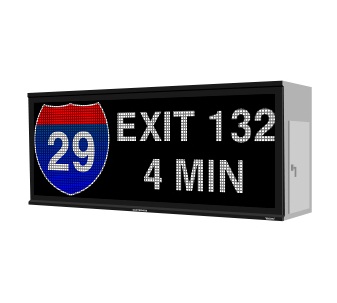
Highway dynamic message signs (DMS) from LED display and scoreboard systems manufacturer Daktronics are vulnerable to cyberattacks, the Department of Homeland Security’s ICS-CERT (Industrial Control System Cyber Emergency Response Team) has warned.

Daktronics Highway Signs

In an alert published on Thursday, ICS-CERT revealed that the Daktronics Vanguard DMS configuration software has a default password that can be used to remotely access highway signs. Initially, the Federal Highway Administration informed ICS-CERT of a hardcoded password, but Daktronics has clarified that it’s actually a default password that can be changed upon installation.

A proof-of-concept for such attacks is publicly available, which is why entities responsible for highway signs are advised to take measures. Daktronics and the Federal Highway Administration recommend changing the default password to a strong one, placing the displays on private networks, and disabling telnet, webpage, and web LCD interfaces if not needed.

Traffic signs, particularly ones used in construction areas, are often hacked to display amusing messages. The control boxes on these displays are in many cases left unprotected and since they’re on ground-level, it’s not difficult to hijack them.

Recently, highway sign hacking has become more common. At the end of May, someone hijacked several signs in North Carolina and made them display a message which read “Hack by Sun Hacker.”

A Twitter user with the online moniker “SUN HACKER” described the following method that can be used to hack road signs: “1 Change the lan of VPN to INTERNET protocol. 2- Scan all the range of the IP on port 23. 3- bruteforce the password. 4- add your message.”

Advertisement. Scroll to continue reading.

Highway signs are not the only component of the US road transportation system vulnerable to cyberattacks. In April, Cesar Cerrudo, CTO of research firm IOActive, revealed that the traffic control systems used in the United States and various other countries around the world contain flaws that can be exploited by an attacker to cause traffic jams and other problems at intersections, freeways and highways.


Written By

Eduard Kovacs (@EduardKovacs) is senior managing editor at SecurityWeek. He worked as a high school IT teacher before starting a career in journalism in 2011. Eduard holds a bachelor’s degree in industrial informatics and a master’s degree in computer techniques applied in electrical engineering.

Daily Briefing Newsletter

Subscribe to the SecurityWeek Email Briefing for the latest cybersecurity threats, trends, and expert insights.

Click to comment

Trending

Daily Briefing Newsletter

Subscribe to the SecurityWeek Email Briefing to stay informed on the latest threats, trends, and technology, along with insightful columns from industry experts.

Join this live webinar as we break down why email-layer defenses alone can't keep pace with the modern phishing ecosystem, how agentic AI is changing the capacity equation for security teams, and more.

Register

This year's summit will help organizations learn how to utilize tools, controls, and design models needed to properly secure cloud environments. Interact with leading solution providers and other end users facing similar challenges in securing a variety of cloud deployments.

Register

People on the Move

Fable Security has appointed Jacob Berry as Chief Information Security Officer.

iCOUNTER has named Ali Waezzadah as Chief Information Security Officer.

Roger Hale has joined 1Kosmos as Chief Information Security Officer.

More People On The Move

Expert Insights

Four decades of incident response experience suggest that exploits are often the symptom, not the root cause, of today’s cybersecurity failures.

Daily Briefing Newsletter

Subscribe to the SecurityWeek Email Briefing to stay informed on the latest cybersecurity news, threats, and expert insights. Unsubscribe at any time.