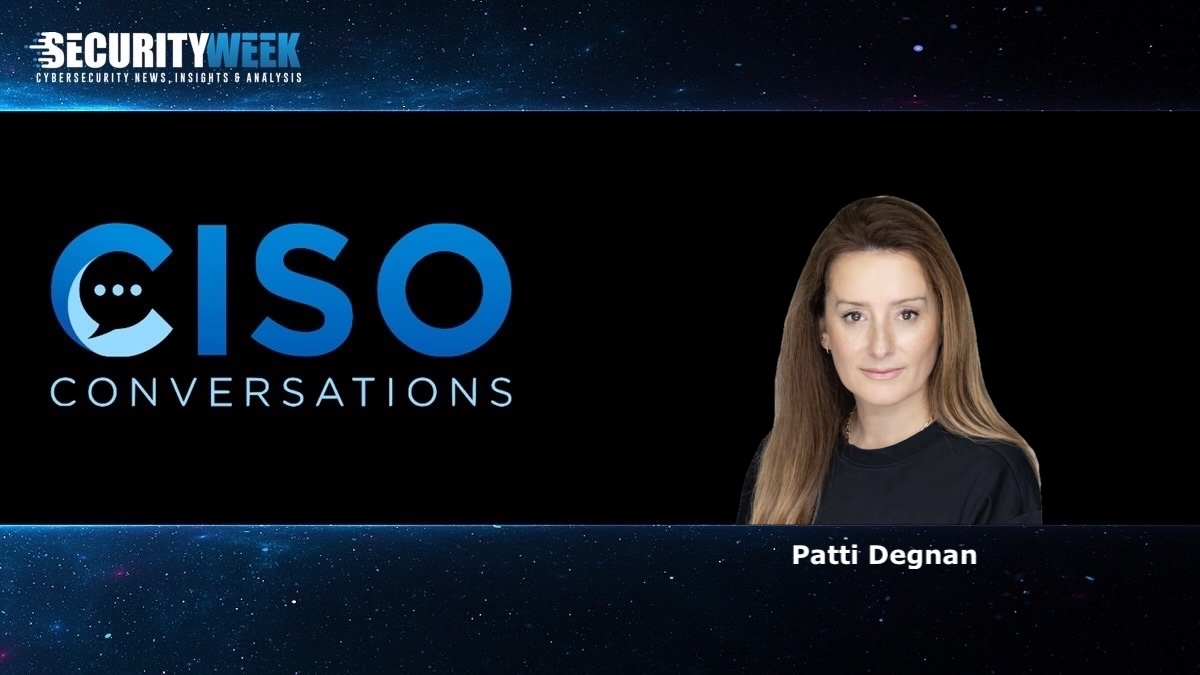
Patti Degnan’s journey is unusual. She didn’t have an early plan to become a CISO; but perhaps life events made it inevitable.
Patti Degnan’s first encounter with security shaped her future interest: her identity was stolen in 2006. “That was my first introduction into safeguarding data. It piqued my interest in how to better protect my own information. I wanted to understand what had happened, so I tried to discover what information about me was held by different agencies. The intent was seeing if my personal data was safe – but the effect was learning the concepts of privacy and personal data protection.”
It wasn’t until joining Symantec in 2012 that this underlying interest began to rise to the surface. “I was in internal audit, focusing on the operational and IT perspective, and began to focus on data privacy.” This was pre-Snowden and years before GDPR. She was combining audit knowledge, PCI understanding and privacy knowledge at a time its importance was growing.
Symantec had made several acquisitions. “We probably had close to 60 different backend infrastructure components that were all payment gateways. I worked hard trying to figure out what that complex environment looked like, and how we were deploying controls around it – and that was my first serious foray into security.”
She left Symantec in 2015, having become IT audit and compliance manager, and moved to LendingClub as senior manager in IT compliance and assurance. She was now seriously immersed in security. By 2018 she was senior director, information security GRC at Informatica. She then led security teams at Looker through its acquisition by Google, and by 2023 she was CISO at Notion. In 2025 she became an operating partner with the venture firm Andreessen Horowitz but returned to full-time cybersecurity in 2026 as CISO at Glow, an AI-powered endpoint security company that came out of stealth in July with $180 million in funding.
During this 20-year journey she evolved from a security victim to a security leader. Noticeably, however, it wasn’t a career plan to become a CISO – cybersecurity leadership simply grew from increasing interest and concern over personal privacy.
Leadership is a complex subject. Not everyone can be a leader, but you must be a leader to be a CISO. Where does that ability come from? Are you born with it or without it, or is leadership a quality you can learn?
The most common suggestion is that you learn as you journey. Nobody leaves high school and jumps straight into being a CISO. The journey begins with excelling in a position within a small team, being promoted to lead that team, and progressing to lead a larger team. As time passes, you learn more leadership skills by leading teams. But this still doesn’t explain why some people can be excellent at their job, but don’t seem able to become a leader.
“Philosophically, I don’t think anyone cannot learn to be a leader. But I think you must want it. I think inherently everyone has the capability to become a leader in their own way,” says Degnan. The implication is that everyone is born with the potential to be a leader, but the potential can only be activated through individual desire to do so. If, for whatever reason, you want or need to be a leader, you can learn the skills necessary to be one.
Since Degnan’s early stolen identity, adversarial activity has grown from ‘simple’ identity theft to any credential theft that can be used as an entry point into enterprise networks. The threat is more sophisticated, and the risk is more damaging. It is no longer a simple threat to individuals but a threat to entire businesses. As this threat has widened, so have CISO responsibilities also widened – CISOs must now have increased business understanding to protect the business. Cybersecurity has become a business enabler rather than simply a threat preventer. The modern CISO needs to be a businessperson as well as a technical security expert; and the former is slowly increasing in importance over the latter. So, today, can a CISO be purely a businessperson without a background of technical expertise?
“I think you can,” she says, “although you must at least have some understanding of how technology works. But ultimately, it’s entirely dependent on the business you’re in. If you’re in a tech company, you should understand how technology works because you have to translate across different stakeholder groups. I’ve worked with a guy who has primarily worked in manufacturing, and his landscape of what he would have to secure is entirely different from what I’ve had to secure in my career; so yes, I do think you have to have some level of technical understanding. Do I think you need to be a hands-on keyboard developer to understand it? No.”
CISOs do not work alone. They either inherit an existing security team, add personnel to that team, or recruit a new one. So, what does Degnan look for when recruiting her own security team members? Are, for example, security certifications important?
“To me, no. I know that’s controversial because some people spend their whole life getting a million certifications. I believe some people are great at applying theory to how things work in reality, but you don’t need to have a certification to do that. I’ve had multiple certifications over the years that I haven’t maintained, but they are a good foundation and a way to understand how things work in different areas of security, you know, in the different departments. But I don’t think it necessarily makes you a better practitioner.”
What she does look for, however, is proof of ownership and understanding of any claimed achievements. If a candidate’s resume claims to have built a specific process, she might ask for details. “Walk me through the thought process that got you there, and how did you do it?” she said. The purpose is not directly to challenge the candidate’s claim, but to discover how well they understand the cause of the need and the solution they created for it.
This approach could but does not exclude keen newcomers who haven’t yet had any opportunity to build anything. “I would never exclude that type of person. But it’s not always possible to include them. It largely depends on the size and maturity of the team you’re building. Large teams can advocate for more junior people that you can grow and shape. Small teams tend to be super lean, and you need to concentrate on acquiring a candidate that can immediately shore up one or more of the domains you need to cover.”
Regardless of the method and reasoning behind recruiting individuals, she keeps one eye on the end product: a single team with a single culture of cooperation. “It is important,” she explained, “to have the right people on the team that are not simply curious and qualified for their own position but will also work together for the team. That’s very important because we’re all in the trenches together, pushing the same rock up the same hill.”
In this process, she doesn’t specifically seek diversity in team member selection. Diversity is likely to come naturally within a team built for functionality. Gender, background, and whether someone is neurodivergent or neurotypical are irrelevant to the purpose of building the best possible cooperative team, and she neither seeks nor rejects any candidate on diversity reasoning.
One issue that faces every security practitioner is ‘burnout’. The dictionary definition is ‘mental or physical collapse caused by overwork or stress’. Working in security embraces both causes: the work is always-on, crises occur at any hour of any day, and failure to remediate any crisis could adversely affect the company and everyone working for it. Burnout is often described as rampant within cybersecurity, with some surveys suggesting it affects between 50% to 70% of practitioners.
Recovery is possible, but it takes time. But then, what? A return to the same conditions that caused the burnout in the first place: overwork and stress? Preventing future or recurring burnout can only be achieved by improving the working environment of overwork and stress. Stress cannot be eliminated because it is caused by adversarial third parties over which we have no control. Overwork could be reduced by increasing the staffing levels; but it is rare for any CISO to have the budget to adequately do so. And, ironically, the more successful the CISO, the less likely they are to receive funding for more staff.

The cause of burnout is cybersecurity itself. The CISO cannot eliminate it. All a CISO can do is attempt to manage the symptoms as they become, or before they become, apparent. Today, AI can help.
“I think burnout comes from everything being urgent,” explains Degnan. “Everything’s on fire all the time, and obviously in security, there’s an infinite amount of work. Part of the role of the CISO, or any leader, is deciding what not to do. So, I try to give very clear priorities. Automate the work you know machines should be doing in this day and age. Reserve humans for judgment and creativity in the problems where context really matters. And I’ve always been a big advocate for telling people to take time off. If you feel you need an extra day, take the day, especially now when we have the ability to build redundancy into workloads with AI. AI is pretty exciting. It gives you greater flexibility in reducing burnout.”
She goes further in time off. “My philosophy has always been that everybody should work wherever they’re going to do their best work. If someone is having a rough week and can’t come in to work, they shouldn’t. I would be happy to take the heat for it in that scenario.”
To be a successful CISO, she believes the two most important character traits are personal resiliency and communication skills. For the first, “In the face of the constantly evolving and changing concerns that are always there, you must be able to pick up the stick and keep walking every day.” That’s not just for yourself; it’s the image of strength you need to convey to your team.
Communication skills include the ability to receive information from one source and translate and deliver that information to a different destination. “You’re sitting between different levels of technical understanding among teams, executives, customers, and in some cases regulators. The board, if you report to it, is a prime example. You must have the communication skills able to translate the potential effect on the business of subtle and technical security issues into language the non- or less-technical business managers can really understand.”
For the CISOs with a planned career path, advice from mentors along the journey is common and important. Degnan had no visible path and received no specific advice. Instead, she learned from her own experiences. “The best lesson I ever learned was to never underestimate yourself,” she explained. “There will always be someone who can go deeper or be more technical in any domain, but you can still understand the strategy and the programs better than you credit yourself.”
But while she had no mentors, she is now a mentor for her security team. So, what advice would she give them in their career path? In specifics, it varies between individuals. “More generically, I have two pieces of advice. Firstly, always dive as deep as you can and know your domain, so you are comfortable when talking about it with other people. Secondly, understand the importance of communicating and partnering across the aisle. We’re not here just to look busy; we have to partner with other teams in the business to add the value of security understanding to what they are doing.”
This is perhaps the single greatest lesson to be learned from Patti Degnan’s philosophy. Security is not an island – it is a partnership with the entirety of the business. Deep understanding of the domain, and constant cooperation within the security team, and from the team to the entirety of the business, is what leads to successful cybersecurity.
Related: CISO Conversations: Noopur Davis – The Accidental Global CISO at Comcast
Related: CISO Conversations: Chris Wheeler – Trust Is the Job, From the Navy to the C-Suite
Related: CISO Conversations: Nico Waisman – From Self-Taught Hacker to AI-Driven Offensive Security at XBOW
Related: CISO Conversations: Russ Kirby – Passion Is the Antidote to Burnout