
Connect with us

Hi, what are you looking for?

SecurityWeekSecurityWeek

Vulnerabilities

CISA Warns of Old jQuery Vulnerability Linked to Chinese APT

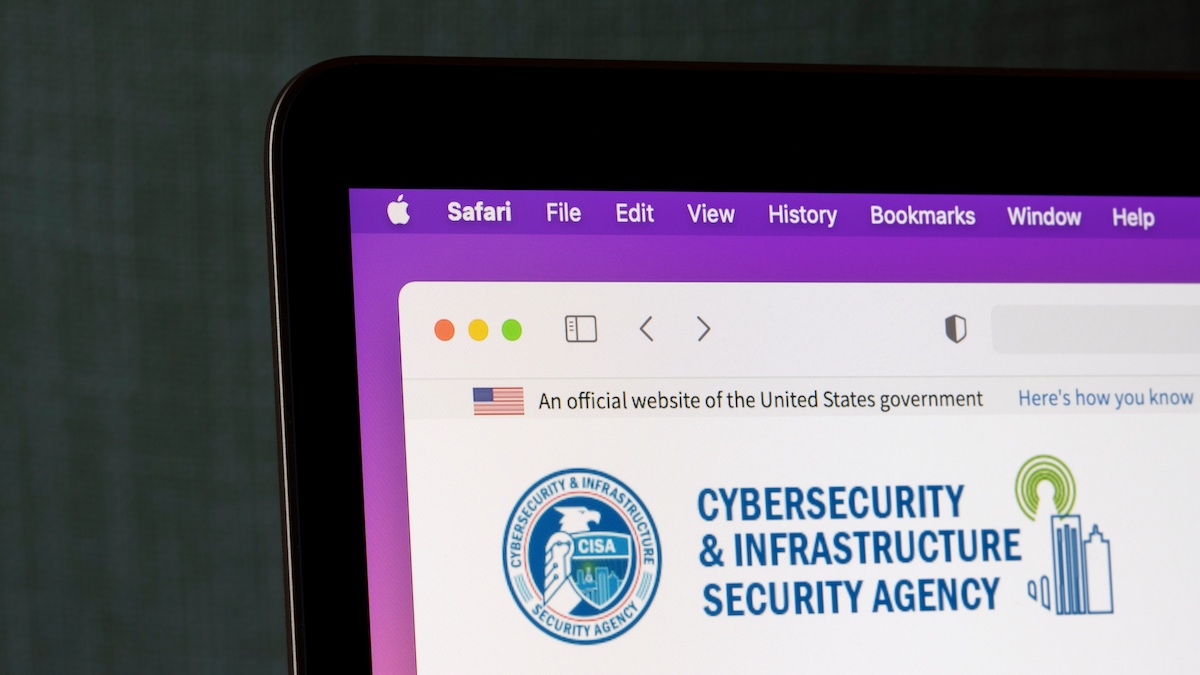
CISA has added the JQuery flaw CVE-2020-11023, previously linked to APT1, to its Known Exploited Vulnerabilities (KEV) catalog.  

CISA

The US cybersecurity agency CISA on Thursday added an old jQuery flaw tracked as CVE-2020-11023 to its Known Exploited Vulnerabilities (KEV) catalog. 

CVE-2020-11023 was disclosed in April 2020. The vulnerability has been described as a medium-severity XSS issue that can be exploited for arbitrary code execution. 

jQuery, a library designed to make it easier to use JavaScript, is widely used. After the vulnerability was disclosed, several major organizations published advisories to inform customers about its impact on their products, including Linux distributions, F5, IBM, and Atlassian.

It’s unclear why CISA has added CVE-2020-11023 to its KEV catalog now. There do not appear to be any recent reports describing exploitation of the vulnerability, and the agency typically does not share information on the attacks involving exploitation of flaws added to the KEV catalog.

However, SecurityWeek has found several older reports indicating that the vulnerability had been exploited by the Chinese state-sponsored threat actor tracked as APT1, whose existence came to light more than a decade ago. 

Tenable reported in 2021 that CVE-2020-11023 was one of the several vulnerabilities chained by APT1 to fully compromise targeted systems.

Advertisement. Scroll to continue reading.

It’s unclear if CISA has evidence of more recent attacks or if it has added CVE-2020-11023 to its list based on these older reports. 

The agency has instructed federal agencies to check whether they are impacted by the jQuery vulnerability and take action by February 13. 

Related: CISA Warns of Second BeyondTrust Vulnerability Exploited in Attacks

Related: CISA Warns of Mitel MiCollab Vulnerabilities Exploited in Attacks

Related: CISA Warns of Exploited Adobe ColdFusion, Windows Vulnerabilities

Written By

Eduard Kovacs (@EduardKovacs) is senior managing editor at SecurityWeek. He worked as a high school IT teacher before starting a career in journalism in 2011. Eduard holds a bachelor’s degree in industrial informatics and a master’s degree in computer techniques applied in electrical engineering.

Daily Briefing Newsletter

Subscribe to the SecurityWeek Email Briefing for the latest cybersecurity threats, trends, and expert insights.

Trending

Daily Briefing Newsletter

Subscribe to the SecurityWeek Email Briefing to stay informed on the latest threats, trends, and technology, along with insightful columns from industry experts.

Today’s attackers are no longer breaking in — they’re logging in. Join this live webinar as we break down the modern identity attack chain and examine how recent breaches exploited weaknesses in authentication, identity verification, and access management processes.

Register

AI has accelerated both sides of the fight. Adversaries are weaponizing vulnerabilities faster, while defenders are racing to ship detections and configurations. Join this live webinar as we explore how to prove your controls actually hold against new threats, map your security maturity, and unite breach simulation with automated pentesting into a single, coordinated program.

Register

People on the Move

SolarWinds has appointed Justin Henkel as Chief Information Security Officer.

J. Paul Haynes has joined Cinchy as Chief Executive Officer.

Hatem Naguib has become Chief Executive Officer at Sysdig.

More People On The Move

Expert Insights

Four decades of incident response experience suggest that exploits are often the symptom, not the root cause, of today’s cybersecurity failures.

Daily Briefing Newsletter

Subscribe to the SecurityWeek Email Briefing to stay informed on the latest cybersecurity news, threats, and expert insights. Unsubscribe at any time.





