Three different companies from three separate continents have agreed a memorandum of understanding to advance secure communications by combining their respective specialisms.
Partisia (Denmark) is a business blockchain specialist, and a major player in multi-party computing (MPC). Squareroot8 (Singapore) is a specialist in quantum-safe communications. NuSpace (Long Beach, California) specializes in IoT connectivity and satellite-as-a-service.
“By integrating quantum-safe cryptography with QRNG-equipped satellites, this partnership delivers a revolutionary solution for secure communication and multi-party computation – ensuring privacy, efficiency, and quantum-proof security for the future of data processing,” says Mark Medum Bundgaard, CPO at Partisia
Although much is made of NIST’s PQC algorithms, they will still require genuinely random numbers to defeat quantum decryption — and the only known source of genuine randomness is the unpredictable nature of quantum mechanics. Hence the growth in quantum random number generators (QRNG).
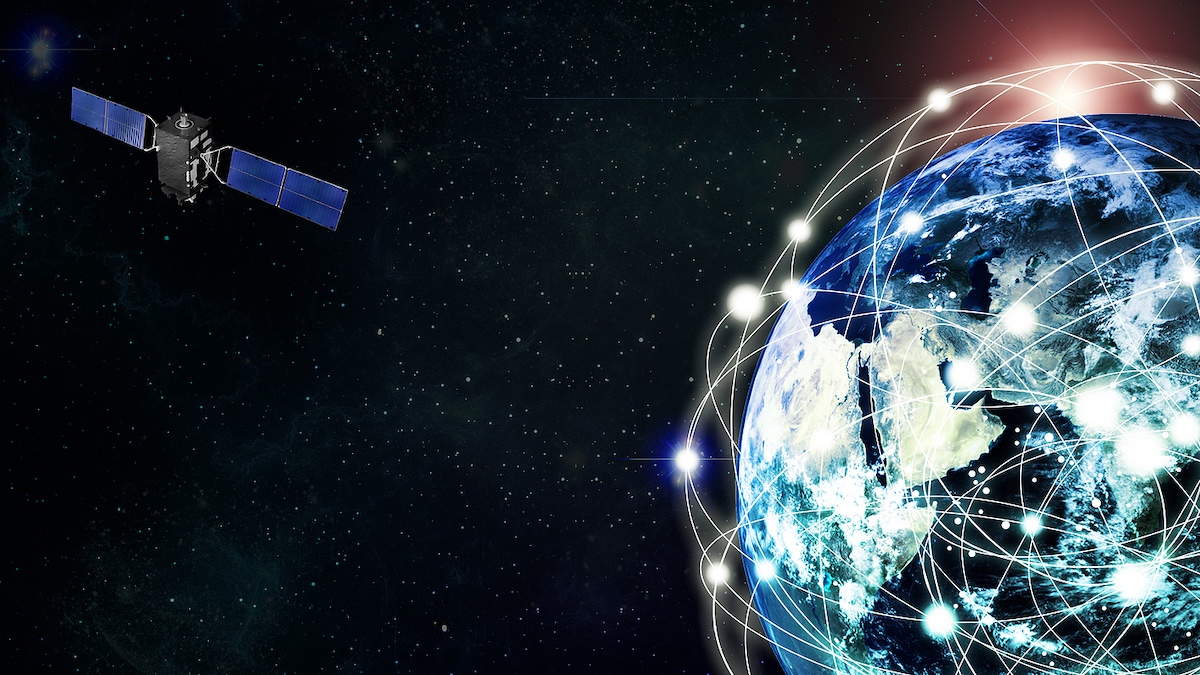
Squareroot8 has developed a single-board device able to produce quantum random numbers — and NuSpace will include this within a satellite and put it into space, expanding its own IoT communications solutions and offering a path to a much wider market of quantum safe comms.
Partisia offers one of these possibilities. It has its own roots in cryptography and MPC — leading to a blockchain based, secure and privacy-preserving secure MPC offering.
The demand for secure MPC is stronger than may immediately be apparent, driven by the combined motivation of privacy laws and the commercial need to be trusted by customers. Bundgaard gives two examples.
“Right now, we’re running MPC on Danish healthcare data,” he said. “If I’m a doctor or researcher wanting to study all the cancer patients in Denmark, I run up against privacy concerns and regulations. No single doctor should have access to all this data for all of these patients across multiple hospitals — but I cannot do the research without the data.”
The solution is secure MPC, where patients’ data is split into multiple component parts. A technique known as pre-processing is invoked to maintain privacy— an example could be the use of beaver triples. From a and b, you can derive c. You don’t know the initial secrets, but all c’s are correlated and can be used for research.
Bundgaard gives another example: banks wanting to share data to develop a new fraud detection model. “It’s not just a question of privacy regulations; you’re also butting up against financial regulations. And no customer is going to be happy with their bank giving out personal data to other banks. So, the data is split and correlated in the preprocessing stage.”
This preprocessing stage occurs before the correlated random data is combined for the real research computations. The privacy of the sources is maintained, but it still needs to be encrypted. Here, Partisia’s encryption expertise comes into play. The preprocessed data is brought together in a blockchain to provide confidentiality, immutability, integrity and availability. The firm supports fully homomorphic encryption so that the computation can happen without ever decrypting the data
“We’re kind of breaking new ground in this,” says Bundgaard. “When we look at quantum today, most people describe it as an arms race. Who’s going to do the right thing and who’s going to get there first? And this is where it gets very interesting. What can actually be done in all of this?”
Each element of the understanding between the three companies increases the security of the data and the efficiency of the process. Satellites, while not inviolable, are more secure than terrestrial data centers. The ability to generate quantum random numbers and perform PQC encryption from a single location benefits the entire encryption process. Using the satellite to perform the preprocessing is time efficient. But the real advantage of this memorandum of understanding is that it provides a pathway to many more secure business applications.
Related: QuSecure Unveils Quantum-Resilient Communications Satellite Link
Related: Quantum Cybersecurity Provider QuintessenceLabs Raises $18 Million
Related: Mitigating Threats to Encryption From Quantum and Bad Random