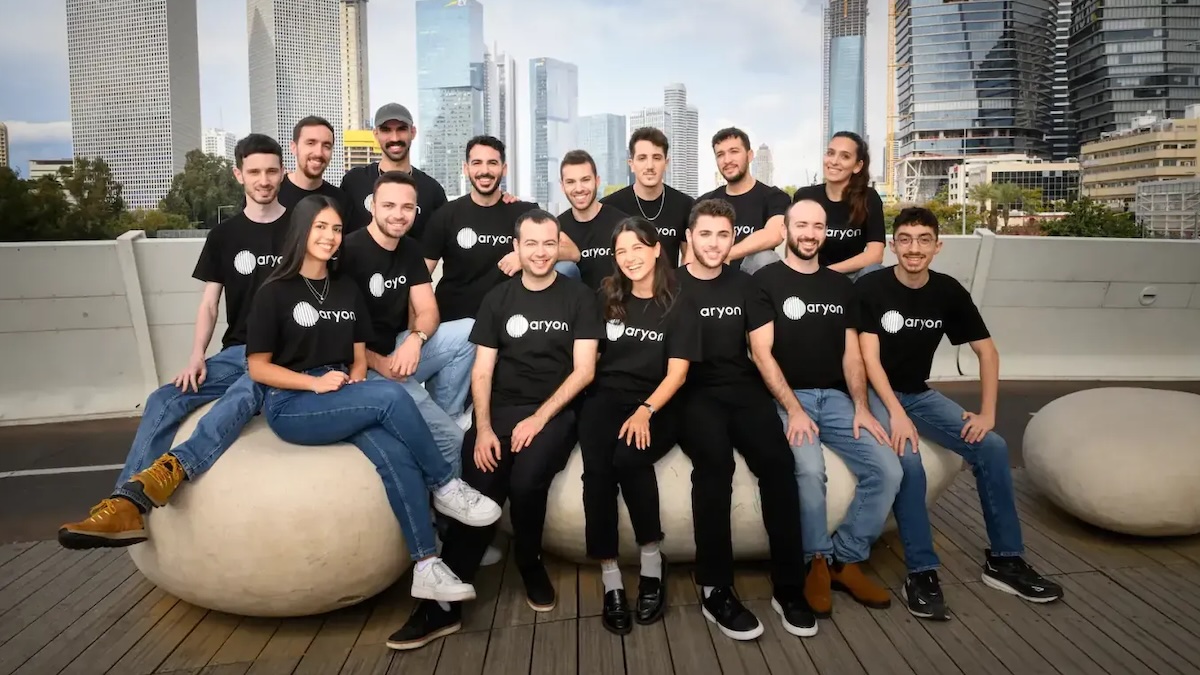
Tel Aviv-based Aryon Security has stepped out of stealth with $9 million seed funding raised from Viola Ventures and Blumberg Capital, and with support from angel investors Shlomo Kramer, Maty Siman, and Rubi Aronashvili.
Aryon offers a Cloud Security Enforcement Platform based on the idea that prevention is better than cure. The purpose is simple: prevent misconfigurations and forgotten encryption before data is deployed to the cloud. The alternative, detect security issues after deployment, is costly, time consuming, difficult – and tempts fate.
Aryon was founded by Ron Arbel (CEO), Ariel Litmanovich (CTO), and Yair Ladizhensky (VP R&D). All three are alumni of Matzov, an information security unit within the C4I Directorate of the Israel Defense Forces (IDF). And all have been involved with Israel’s Project Nimbus – a $7.2 billion project to develop a secure national cloud for both government and private sector organizations.
The Aryon founders’ involvement with Nimbus highlighted the need and difficulty in balancing security, usability, and business continuity for cloud deployments, which in turn led to the founding of Aryon and development of the Cloud Security Enforcement Platform.
Customers’ developers creating cloud apps and infrastructure are required to deploy via the enforcement platform, where it is scanned for security issues and policy violations.
The Aryon product is technology agnostic: “The platform adapts to the organization’s existing technological stack, people and processes, whether the organization is using Infrastructure as Code (IaC) or manual definition, in-house or third-party cloud management,” says the firm. “Aryon delivers seamless, consistent cloud protection, minimizing risks caused by human errors and misconfigurations before they enter the cloud.”
This agnosticism is important. Consider the December 2024 breach of Volkswagen, which (posts Litmanovich) exposed sensitive information including vehicle locations, customer information, and operational details on roughly 800,000 electric vehicles. The incident was traced back to a cloud misconfiguration managed by a third-party provider. Had the deployment been made via the Aryon platform, the misconfiguration would have been discovered.
Aryon’s approach is based on proactive prevention rather than reactive detection, and offers multiple advantages: developers can develop freely without being diverted by security concerns, while security teams are released from monitoring every upload to the cloud.
The Aryon platform scans the upload for security policy fails. If it finds an issue, it notifies the developers with recommendations on how to fix the issue before it is deployed. The scan is AI-powered, but the security policy enforced is the customer’s policy.
“The policies belong entirely to the customer,” Litmanovich told SecurityWeek. “Aryon provides recommendations – powered both by AI and Aryon’s expertise – but it’s up to the customer to decide which policies to implement. We aim to support their existing security strategy by helping them identify relevant risks and apply best practices, not to replace or impose our own policies.”
Aryon’s policy recommendations come from its own expertise and its own AI. “Aryon’s AI pulls data from multiple sources, including the organization’s native cloud environment and third-party security tools that are highly effective at identifying issues,” continued Litmanovich.
“It then combines these insights with our own research on security best practices and the security frameworks most relevant to the organization to generate enforceable, tailor-made policies that match the organization’s unique needs and risks.”
Related: Cloud Misconfigurations Expose 110,000 Domains to Extortion in Widespread Campaign
Related: OWASP Data Breach Caused by Server Misconfiguration
Related: Organizations Warned of Top 10 Cybersecurity Misconfigurations Seen by CISA, NSA
Related: Despite Warnings, Cloud Misconfiguration Problem Remains Disturbing