
Users can now report accounts that distribute private information on Twitter, the social media giant announced on Thursday.
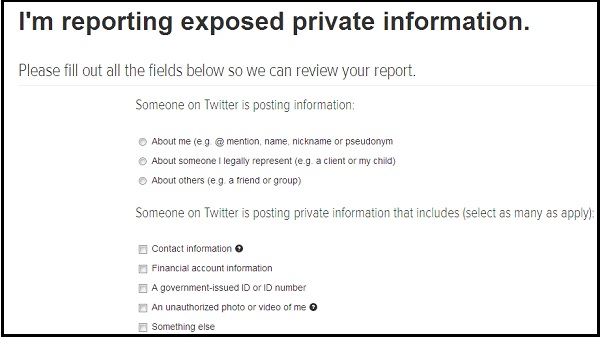
Twitter recently streamlined its abuse reporting process and this week it added options for reporting impersonation, self-harm or suicide, and sharing of confidential and private information.
Users who report leaked private information are asked to specify their relationship to the individual whose data has been posted, and the type of information that has been exposed. This can include contact information, financial information, unauthorized photos or videos, and government-issued IDs.
“Over the last six months, in addition to the product changes, we have overhauled how we review user reports about abuse,” said Tina Bhatnagar, vice president of user services at Twitter. “As an example, allowing bystanders to report abuse – which can now be done for reports of private information and impersonation as well – involved not only an update to our in-product reporting process, but significant changes to our tools, processes and staffing behind the scenes. Overall, we now review five times as many user reports as we did previously, and we have tripled the size of the support team focused on handling abuse reports.”
Bhatnagar has also revealed that Twitter has started adding new enforcement actions that it can use against those who violate rules.
The latest round of improvements made by Twitter comes shortly after the company’s CEO, Dick Costolo, said in a leaked internal memo that they “suck at dealing with abuse and trolls on the platform.”
While abusive content might be problematic on Twitter, the platform is also a popular way for attackers to distribute malicious content. A study conducted last year by Trend Micro revealed that of 570 million analyzed tweets, 33 million (5.8%) contained links to malware, spam, phishing pages, and other threats.






