A faulty software update led to the exposure of mobile banking users’ transactions to other users of the application.






Hi, what are you looking for?


A faulty software update led to the exposure of mobile banking users’ transactions to other users of the application.
The startup has built an edge security management (ESM) platform, an AI engine atop the entire edge security stack.
The state-sponsored group’s campaign has targeted government, higher education, financial, and legal entities, as well as think tanks.
Two malicious versions of the popular SDK were uploaded to the PyPI registry, targeting Windows, macOS, and Linux.
The critical-severity flaw leaks application memory and can be exploited to obtain authenticated administrative session IDs.
Initially disclosed as a high-severity denial-of-service (DoS), the bug was reclassified as a critical RCE issue.
The infection chain includes a fake CAPTCHA page, a Bash script, a Nuitka loader, and the Python-based infostealer.
Through the new program, OpenAI will reward reports covering design or implementation issues leading to material harm.
The security defects could be used to bypass authentication, execute arbitrary commands, and decrypt configuration files.
Coruna contains the updated version of a kernel exploit used in Operation Triangulation three years ago.
The holdings company says hackers stole names, Social Security numbers, and driver’s license numbers from its environment.
Specially crafted domains could be used to cause out-of-memory conditions, leading to memory leaks in the BIND resolvers.
The state-sponsored threat actor deployed kernel implants and passive backdoors enabling long-term, high-level espionage.
The high- and medium-severity flaws could lead to denial-of-service, secure boot bypass, information disclosure, and privilege escalation.
The startup will invest in product development and go-to-market efforts as it expands into new sectors.
Apple released security fixes for older devices as well, in iOS 18.7.7, iPadOS 18.7.7, macOS Sequoia 15.7.5, and macOS Sonoma 14.8.5.
The ban aligns with a White House determination that all routers produced abroad are a threat to national security.
The hackers compromised GitHub Action tags, then shifted to NPM, Docker Hub, VS Code, and PyPI, and teamed with Lapsus$.
The Lapsus$ hackers allegedly compromised internal code repositories, credentials, and employee data.
The software refresh fixes eight memory safety bugs affecting seven Chrome components.


The suspect is believed to be Edward Dubrovsky, a Canadian cybersecurity executive who was visiting the United States for a conference.


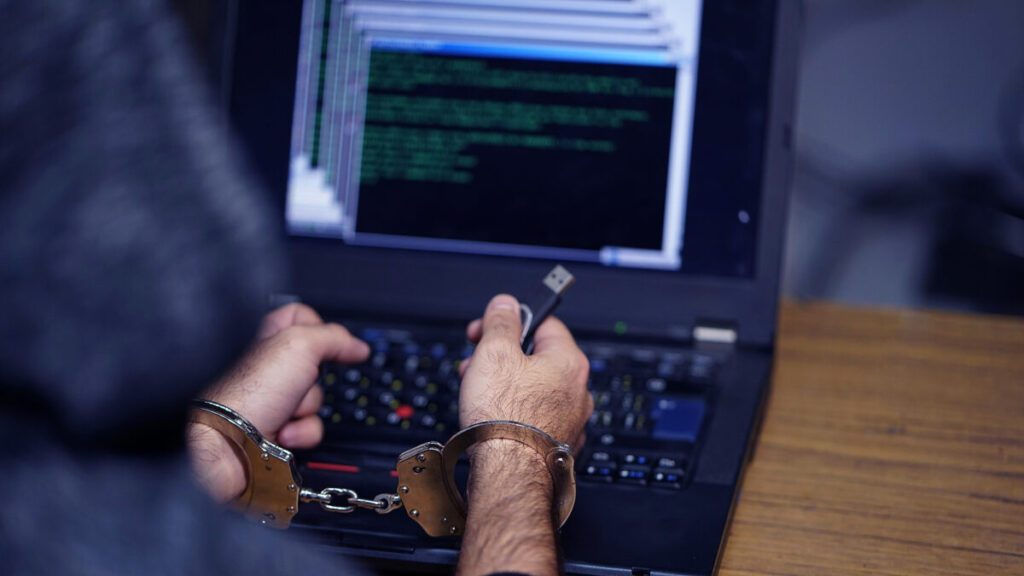
Oleg Korniev was a leader of YMCO, a sophisticated network of money mules that helped hackers move funds outside the US.