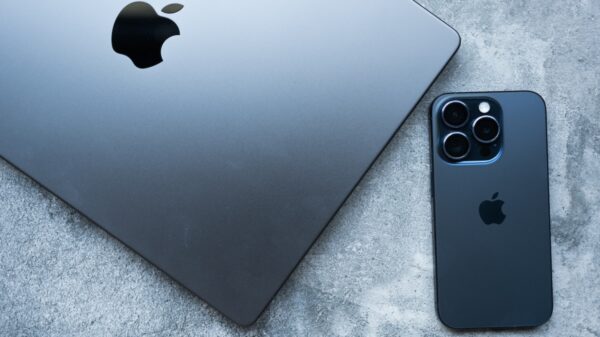
Apple announced on Thursday that the iPhone and iPad have been approved by NATO to handle classified information and have been added to the military alliance’s Information Assurance Product Catalogue (NIAPC).
The tech giant said its phones and tablets are the first consumer devices to receive this level of approval, specifically the ‘NATO RESTRICTED’ level.
The NIAPC is NATO’s official registry of vetted cybersecurity products that alliance members and its military/civil entities can use to meet critical operational security demands.
NIAPC enforces rigorous entry rules for listed security items: products typically must originate from NATO countries, carry approved certifications, obtain national authority sign-off, and demonstrate market-fit for NATO. Approval remains discretionary on a case-by-case basis, with violations risking delisting or suspension.
Their presence in the NIAPC enables iPhones and iPads to be used with classified information without requiring special software or settings. The listing specifies that the native Mail, Calendar, and Contacts apps for iOS and iPadOS provide secure access to data.
Apple said the iPhone and iPad previously received approval to handle classified German government data following an evaluation by the country’s Federal Office for Information Security (BSI). The testing conducted by BSI also ensured that the devices meet NATO’s security requirements.
“Secure digital transformation is only successful if information security is considered from the beginning in the development of mobile products,” said BSI President Claudia Plattner. “Expanding on BSI’s rigorous audit of iOS and iPadOS platform and device security for use in classified German information environments, we are pleased to confirm the compliance under NATO nations’ assurance requirements.”
The NIAPC listing specifies an ‘indigo configuration’, but Apple clarified that it is just a name assigned by BSI during its evaluation. The company noted that a regular device configuration received the NATO approval.
In addition, while the NATO catalog listing mentions iOS 26 and iPadOS 26, Apple said BSI conducted its testing on earlier versions of its operating systems.
Related: Apple Patches iOS Zero-Day Exploited in ‘Extremely Sophisticated Attack’
Related: Apple Bug Bounty Update: Top Payout $2 Million, $35 Million Paid to Date
Related: Apple Unveils iPhone Memory Protections to Combat Sophisticated Attacks