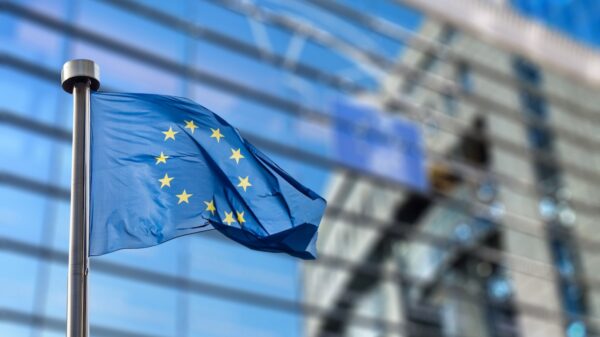
The European Union on Tuesday set up a system for imposing sanctions against people accused of cyberattacks, information manipulation or acts of sabotage on behalf of Russia to undermine EU support for Ukraine.
NATO warned earlier this year of Russian “hostile state activity” against the Czech Republic, Estonia, Germany, Latvia, Lithuania, Poland and the U.K., and said that the Kremlin’s actions “constitute a threat to allied security.”
The EU said that it too has “detected an increasing number of a broad range of activities.” It said that Russia also continues to disrupt satellite communications, violate European airspace and organize physical attacks against people.
The challenge is that many of the activities fall below a threshold that might require a military response and both organizations are struggling to discourage such attacks effectively.
The EU’s new framework will allow it to target people, agencies or organizations that seek to undermine its fundamental values or “security, independence and integrity.” But no actual sanctions have yet been imposed. These measures would come later, once agreed by member countries.
EU foreign policy chief Josep Borrell said that the members are “united and determined to address these activities and hold perpetrators accountable. Our support to Ukraine will remain solid and unwavering for as long as it takes.”
The asset freezes and travel bans would be imposed for several kinds of hybrid threats, including undermining elections, democratic institutions or the economy, as well as attacking critical infrastructure or using migrant flows to destabilize countries.
It would allow the EU to “target those who are responsible for, implement, support or benefit from Russia’s destabilizing actions worldwide, as well as their associates and supporters,” a statement said.
Related: US Sanctions 12 Kaspersky Executives
Related: EU Sanctions Six Russian Hackers
Related: US Targets Russian Election Influence Operation With Charges, Sanctions, Domain Seizures