

The U.S. Air Force says it knows what caused an RQ-170 drone to crash in Iran, but will not release specific details. What’s certain, Air Force Chief of Staff General Norton Schwartz told Reuters, is that Iran had nothing to do with it.
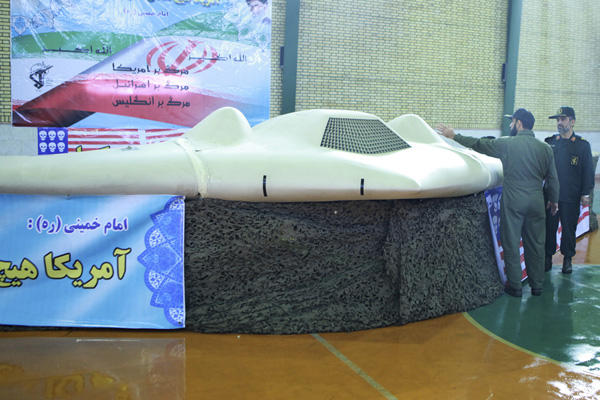 In December, SecurityWeek reported that an Iranian engineer was speaking to the media, claiming that his country captured the U.S. drone targeting its GPS systems. The engineer told the Christian Science Monitor (CSM) the process of capturing the drone centered on spoofing the communications signal used to manage GPS.
“By putting noise [jamming] on the communications, you force the bird into autopilot. This is where the bird loses its brain…,” the engineer told the CSM.
Once the autopilot was activated, Iran was able to force the drone to “land on its own where we wanted it to, without having to crack the remote-control signals and communications…”
The CSM report also quoted the engineer as explaining that the technique was a known vulnerability. The existing vulnerability mentioned by the CSM report and the Iranian engineer is in fact two vulnerabilities, which were chained together to accomplish the goal of seizing the aircraft. Iran, it was said, first triggered the autopilot, and then spoofed the GPS in order to force the drone down in what it thought was friendly airspace, a difference in terrain led to structural damage during the forced landing.
Despite Iran’s claims, the U.S. Air Force has said that it is aware of what caused the drone to crash, but is adamant that Iran’s military was not part of the equation. Instead, while not mentioning the exact cause crash, General Schwartz told Reuters that they have completed an investigation into the possibility that a combination of pilot error and technical malfunctions triggered the loss.
While not speaking to the outcome of the investigation, the General did comment that the unmanned aircraft were still being used to collect intelligence and provide critical information to those on the ground.






