Several vulnerabilities discovered in the ScrutisWeb ATM fleet monitoring software made by French company Iagona could be exploited to remotely hack ATMs.
The security holes were discovered by Synack Red Team members and they were patched by the vendor in July 2023 with the release of ScrutisWeb version 2.1.38.
ScrutisWeb allows organizations to monitor banking or retail ATM fleets from a web browser, enabling them to quickly respond to problems. The solution can be used to monitor hardware, reboot or shut down a terminal, send and receive files, and modify data remotely. It’s worth noting that ATM fleets can include check deposit machines and payment terminals in a restaurant chain.
The Synack researchers identified four types of vulnerabilities that have been assigned the CVE identifiers CVE-2023-33871, CVE-2023-38257, CVE-2023-35763 and CVE-2023-35189.
The flaws include path traversal, authorization bypass, hardcoded cryptographic key, and arbitrary file upload issues that can be exploited by remote, unauthenticated attackers.
Threat actors could exploit the flaws to obtain data from the server (configurations, logs and databases), execute arbitrary commands, and obtain encrypted administrator passwords and decrypt them using a hardcoded key.
The researchers said an attacker can leverage the flaws to log into the ScrutisWeb management console as an admin and monitor the activities of connected ATMs, enable management mode on the devices, upload files, and reboot or power them off.
Hackers could also exploit the remote command execution vulnerability to hide their tracks by deleting relevant files.
“Additional exploitation from this foothold in the client’s infrastructure could occur, making this an internet-facing pivot point for a malicious actor,” explained Neil Graves, one of the researchers involved in this project.
“Further examination would be required to determine if custom software could be uploaded to individual ATMs to perform bank card exfiltration, Swift transfer redirection, or other malicious activities. However, such additional testing was out of scope of the assessment,” Graves said.
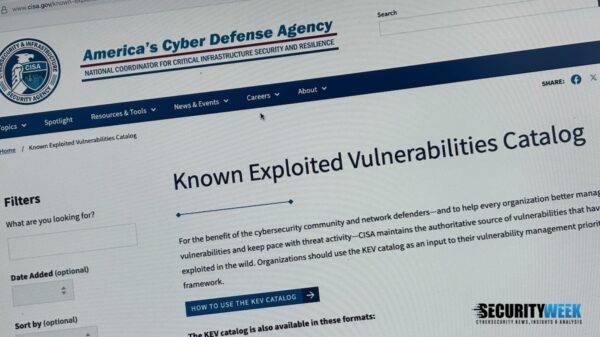
The US Cybersecurity and Infrastructure Security Agency (CISA) recently published an advisory to inform organizations about these vulnerabilities. According to CISA, the impacted product is used worldwide.
Related: Millions Stolen in Hack at Cryptocurrency ATM Manufacturer General Bytes
Related: New ATM Malware ‘FiXS’ Emerges
Related: Diebold Nixdorf ATM Flaws Allowed Attackers to Modify Firmware, Steal Cash